
LED Grow Light Efficiency: Why Higher Wattage Doesn’t Always Mean Better Plant Growth
Does Higher Wattage Really Mean Better LED Grow Light Efficiency?
Many growers still check LED grow lights by wattage first. A 1200W fixture seems more powerful than an 800W LED grow light. Yet wattage only shows how much electricity the fixture uses. It does not show how much usable light reaches the canopy. It does not show how evenly that light spreads. It also does not show whether the crop can really use that intensity.
With regards to indoor gardening, greenhouses, hydroponics, and cannabis farming, it makes more sense to focus on the efficiency of LED growing lights than their wattage. An efficient lighting fixture with lower watts but superior photon efficiency, distribution, and consistency may promote growth more effectively than a high-watt fixture with poor heat management and inconsistent distribution.

Why Wattage Measures Power Use, Not Plant-Usable Light
Growers should separate power draw from plant response. Plants react to usable photons. They do not react to the number printed on the label. That is why metrics such as PPF, PPFD, PPE, and DLI matter more when comparing grow light wattage.
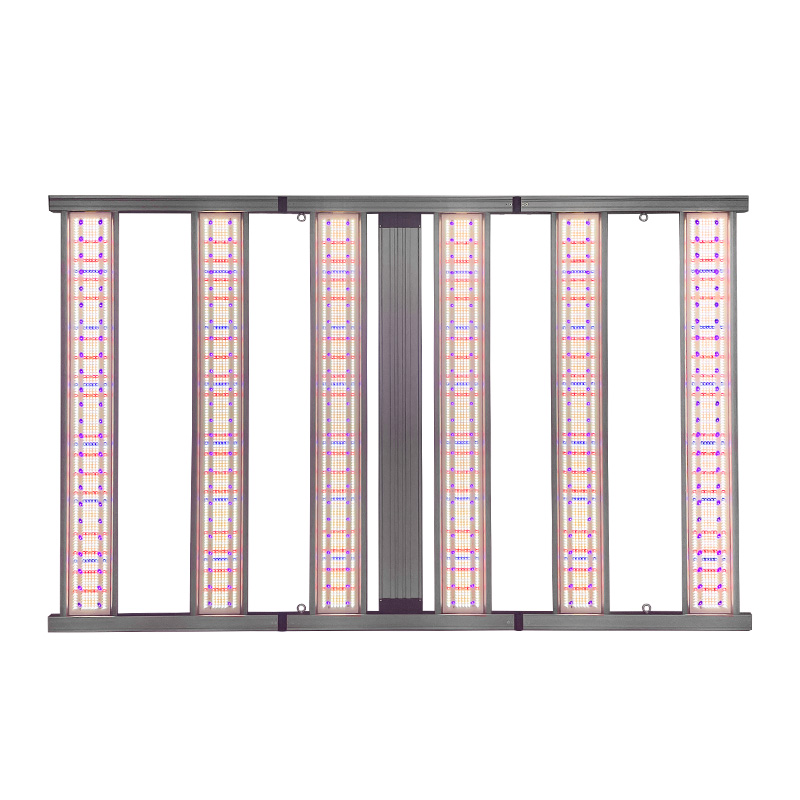
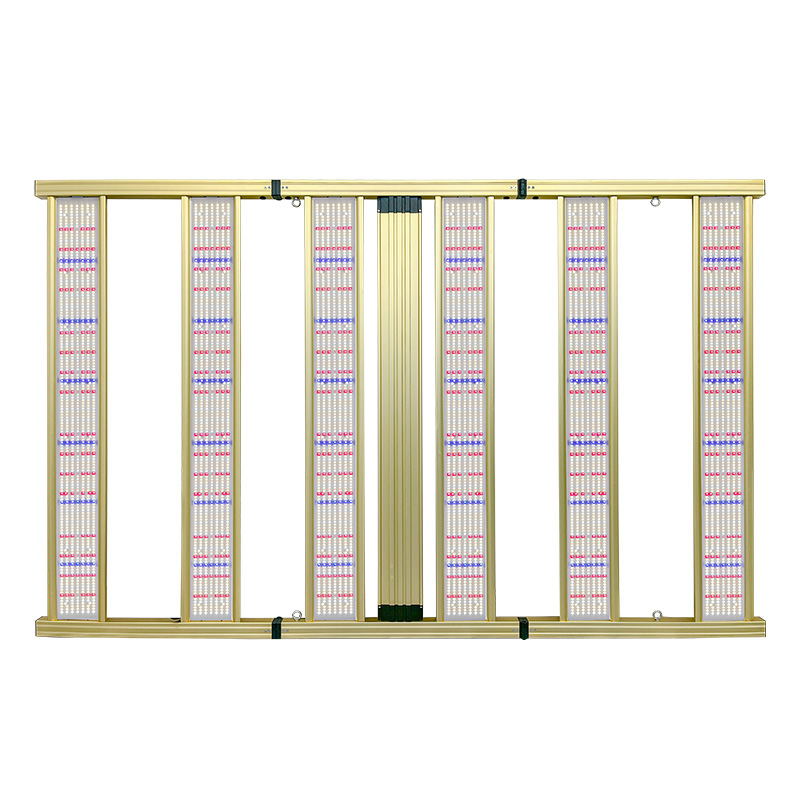
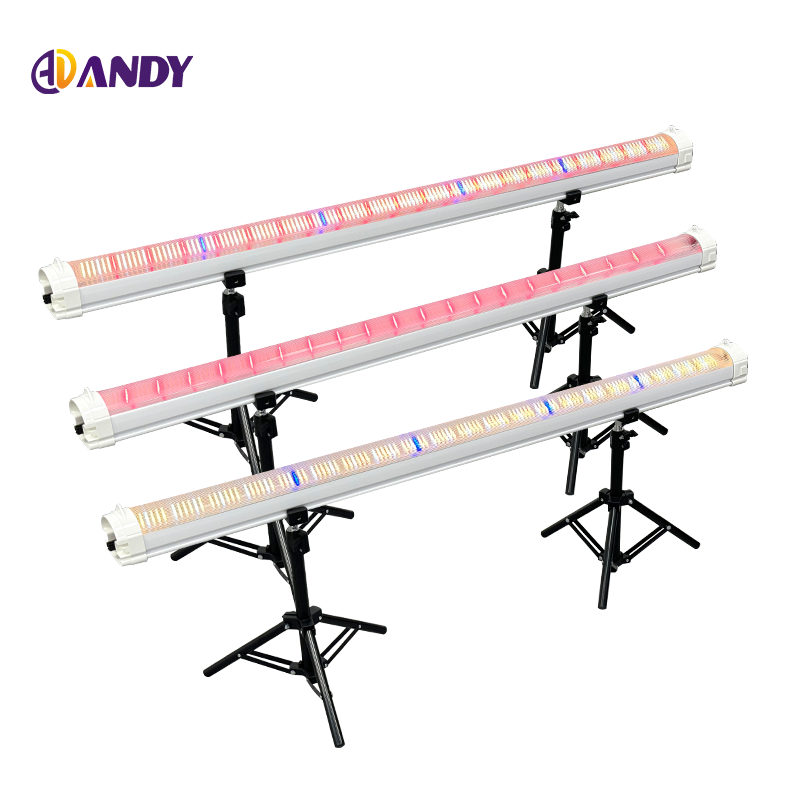
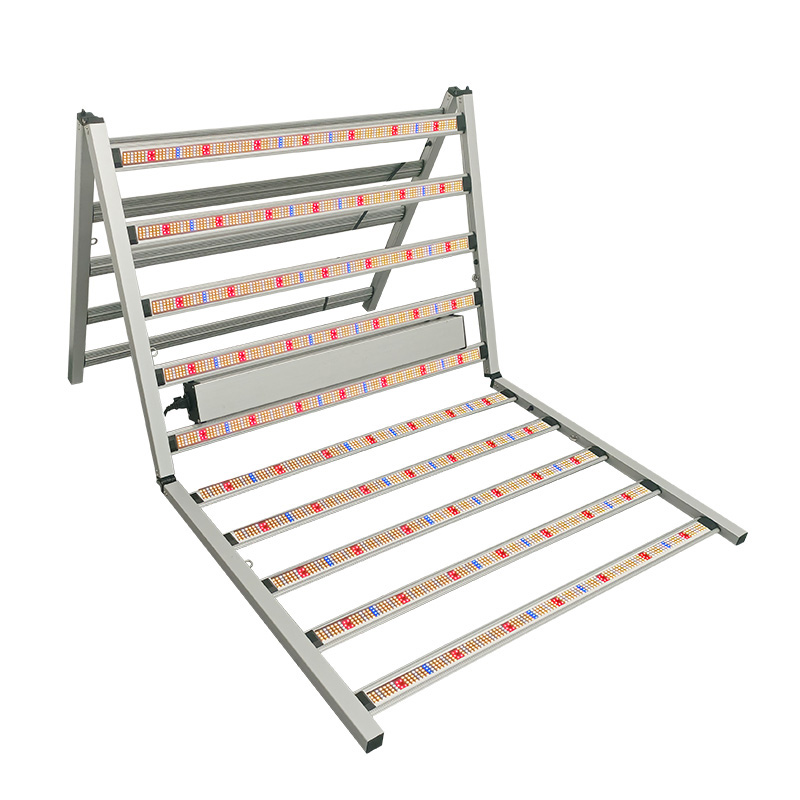
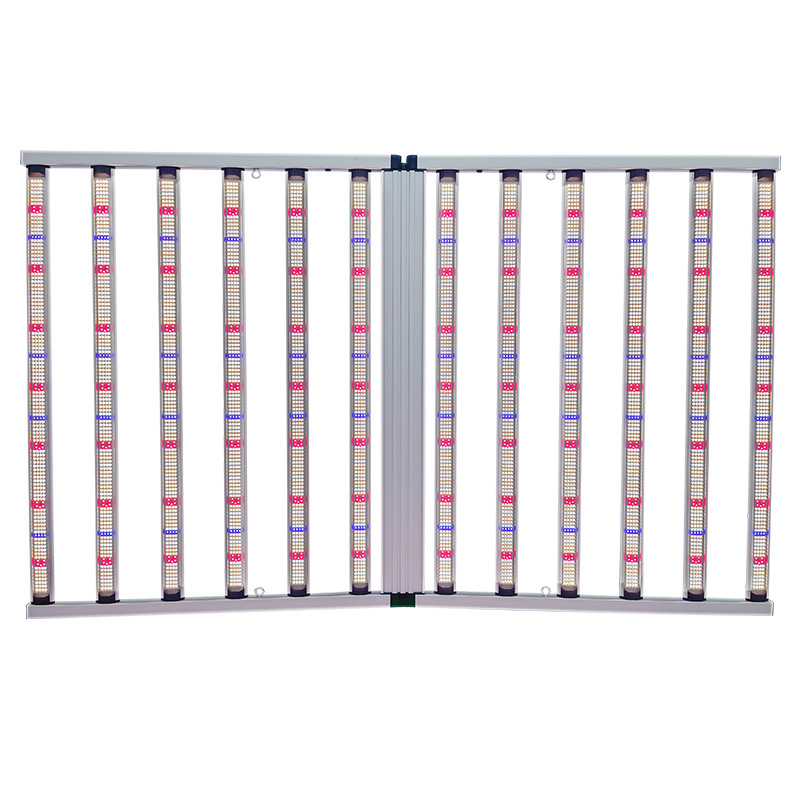
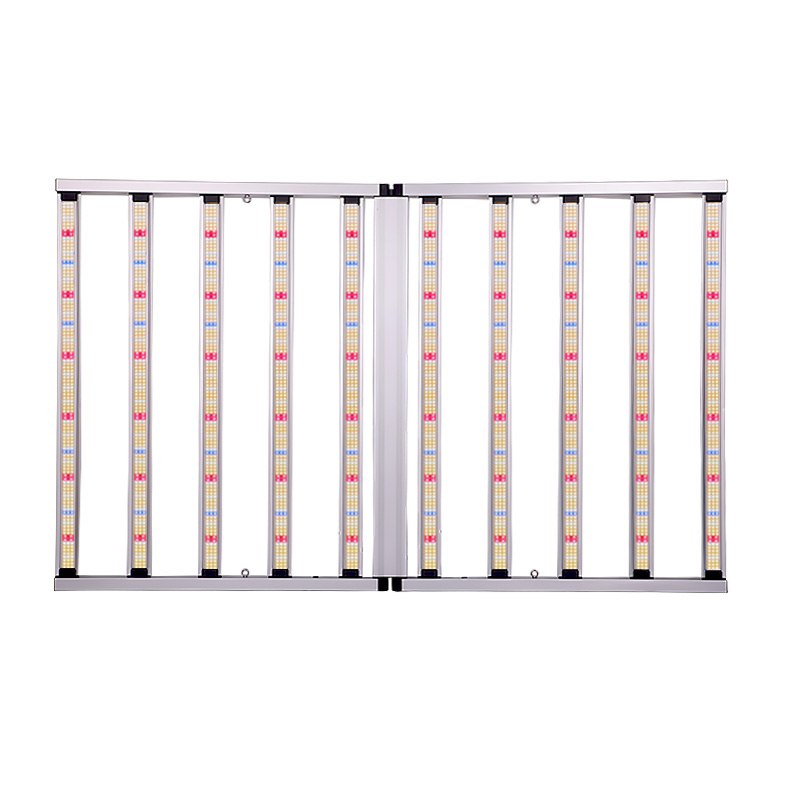
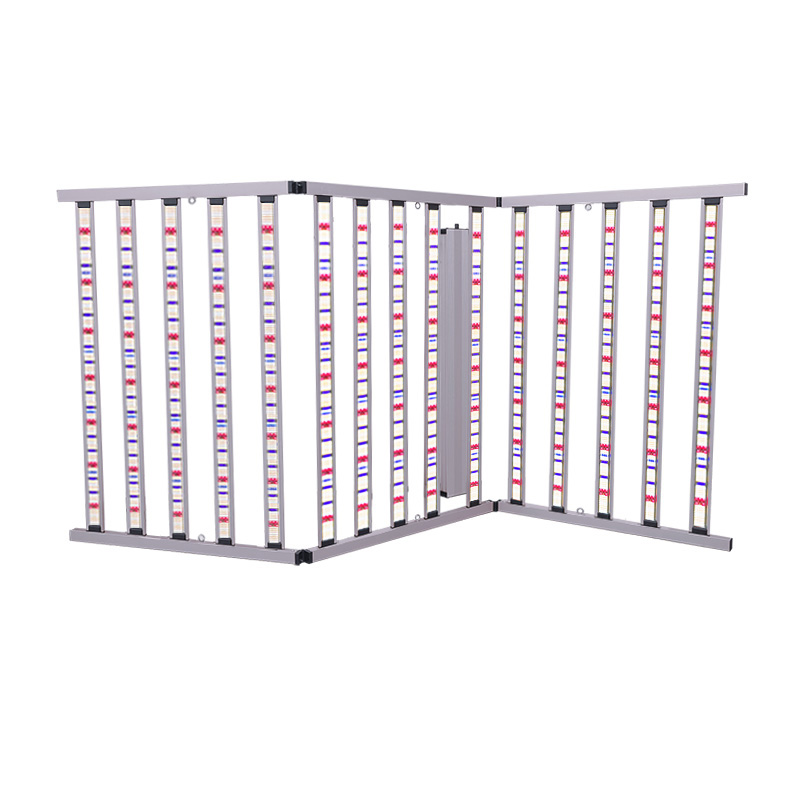
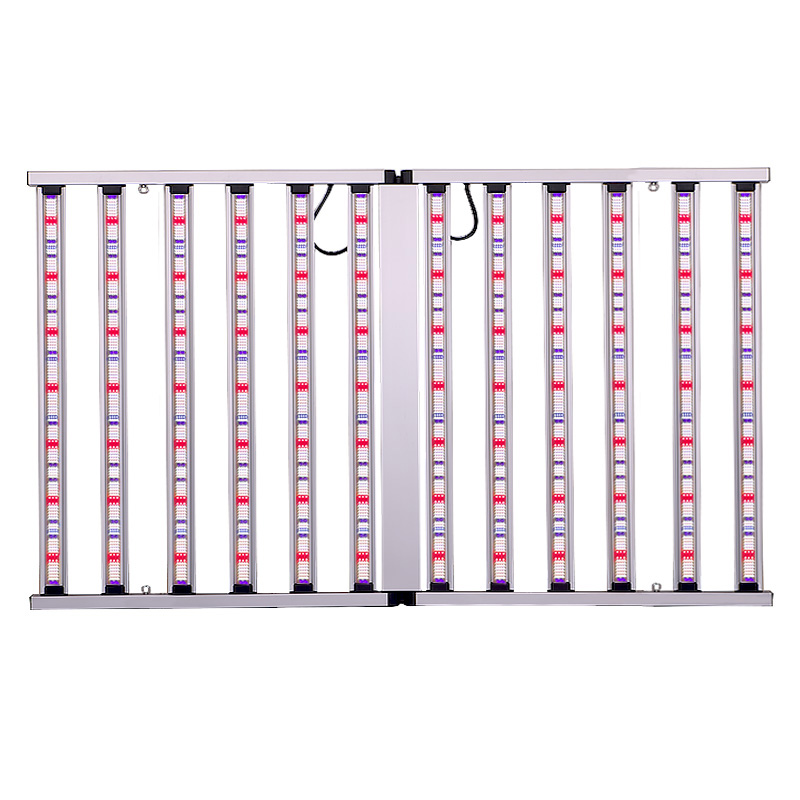
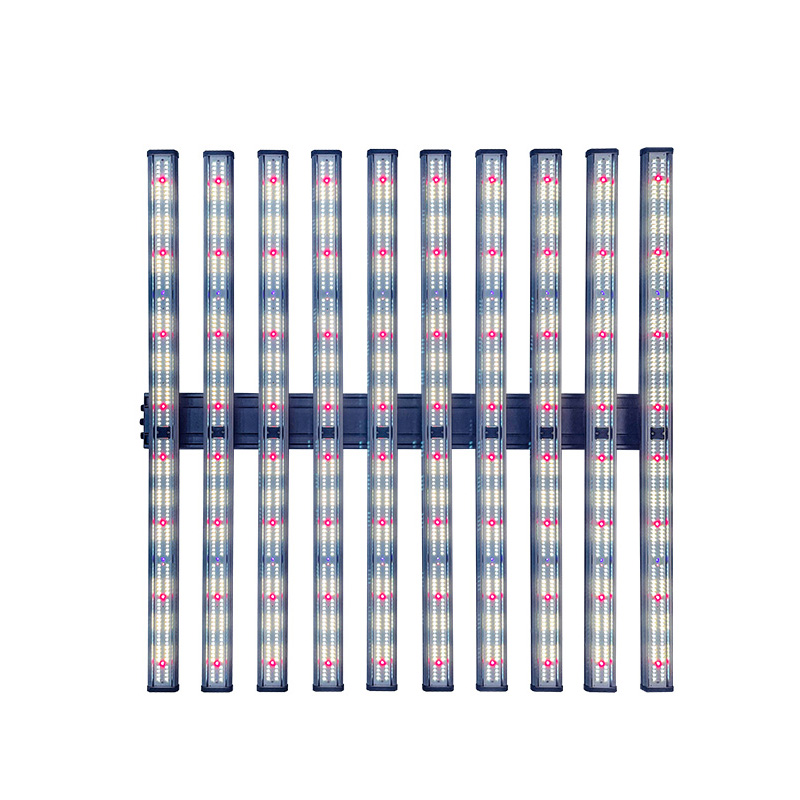
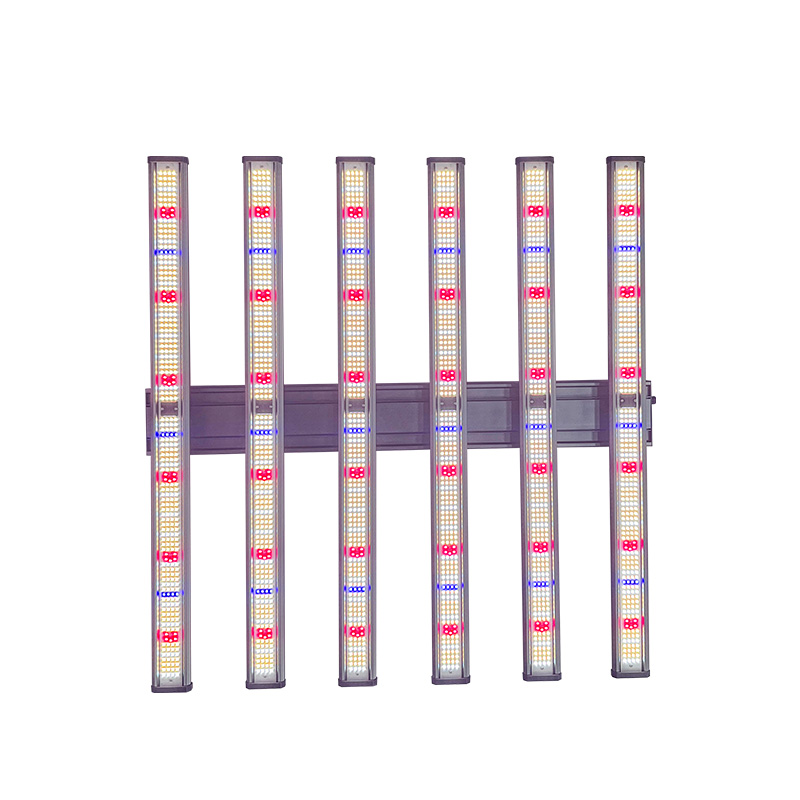
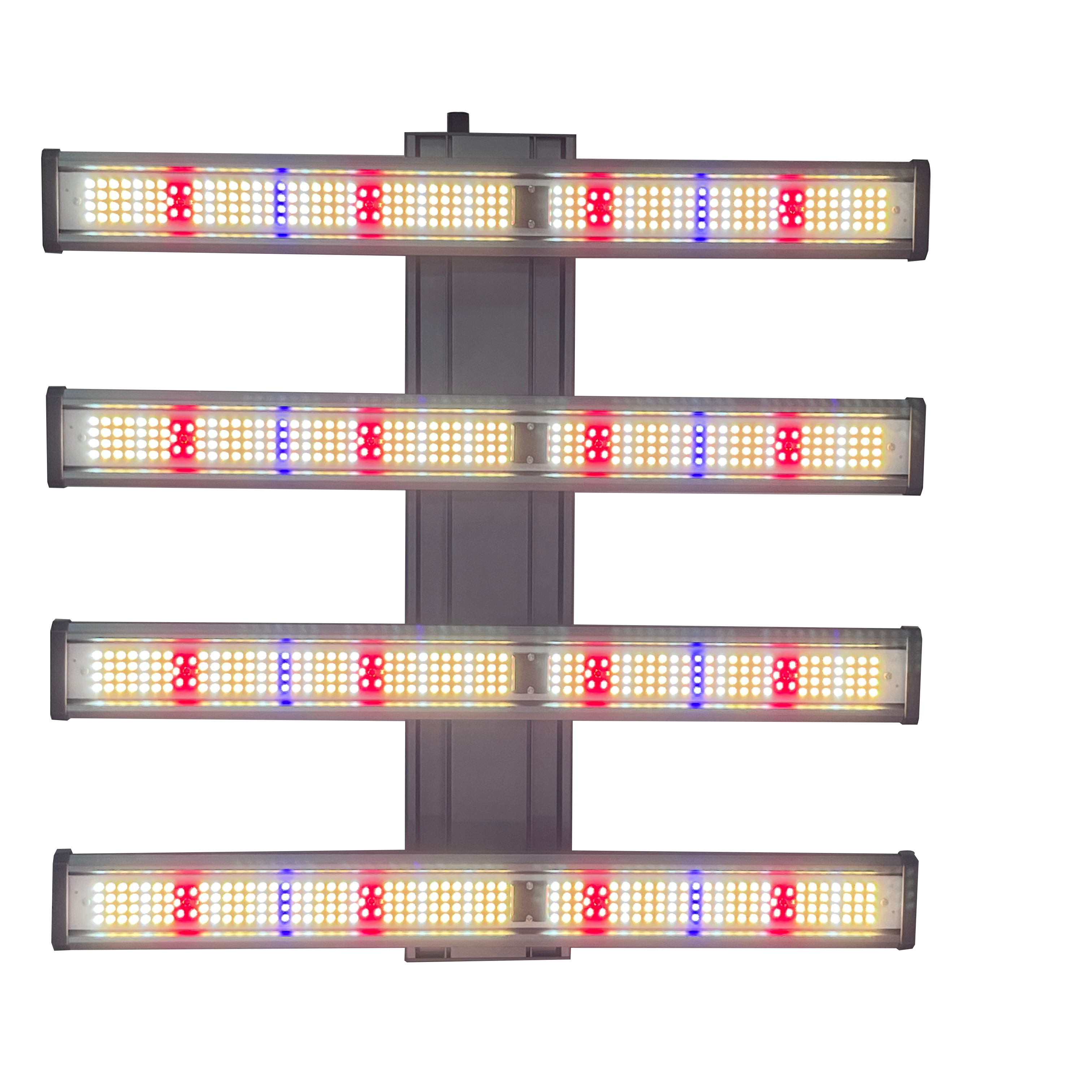
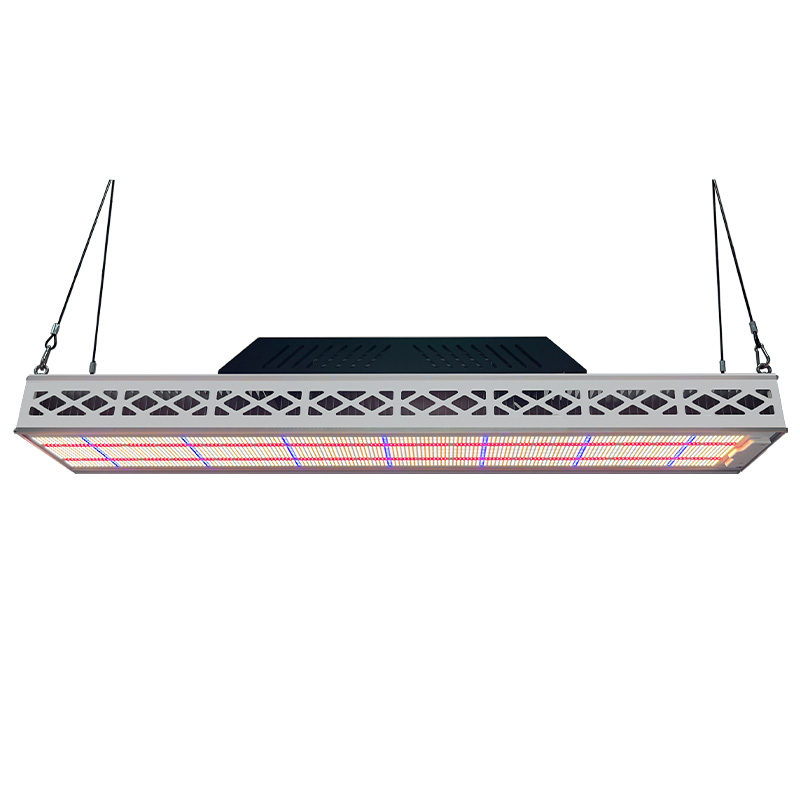
At ANDYLED, we design our bar-style grow lights around real cultivation needs. We avoid oversized wattage claims. Our fixtures use Samsung LEDs. They have a 120° beam angle. They reach up to 3.0 µmol/J efficiency. This helps growers create strong canopy coverage for commercial planting environments.
Why Growers Often Overestimate High-Watt LED Grow Lights
A high-wattage LED grow light can be useful. This only happens when the space crop stage and canopy density require it. If the fixture is too powerful for the area, growers may need to dim it heavily. They may also raise it too high. Both actions can reduce practical efficiency.
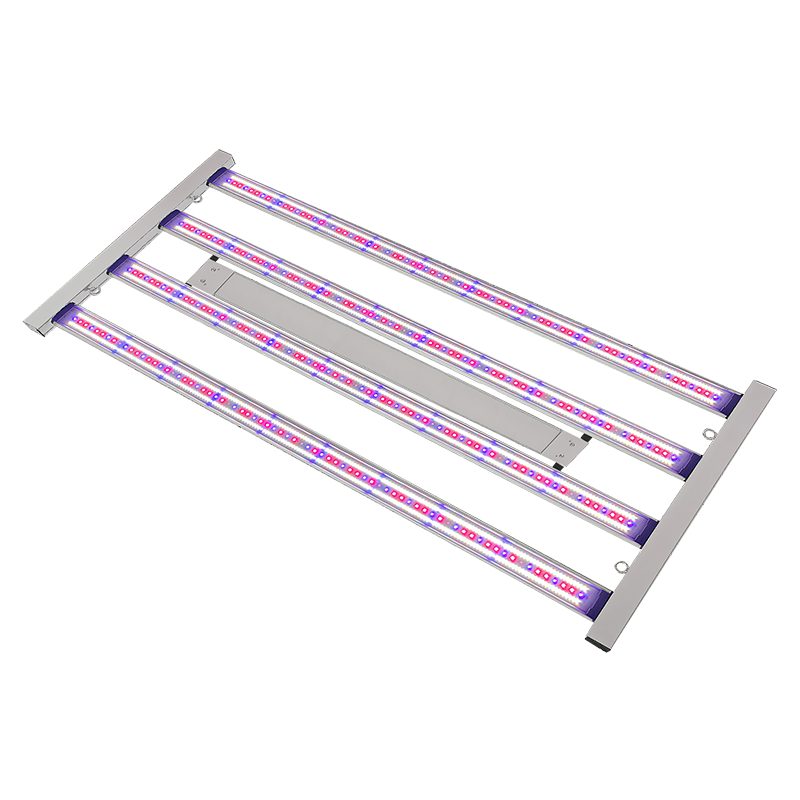
This is why an 800W single-channel dimming LED grow light for 4×4(ft) setups can be a better fit for a compact commercial zone than an oversized fixture. It gives growers enough intensity for dense plant growth. It also allows controlled dimming across seedling, vegetative, and flowering stages.
What Metrics Should Growers Check Before Comparing Grow Light Wattage?
PPF: How Much Total Usable Light the Fixture Produces
PPF shows the total amount of plant-usable light emitted by a fixture. It is more useful than wattage. It tells growers what the light can actually deliver.
PPFD: How Much Light Actually Reaches the Plant Canopy
PPFD matters because crops do not grow under the fixture label. They grow under the canopy. A good PAR map for grow lights helps growers see whether the center corners and edges receive balanced intensity.
PPE: How Efficiently Electricity Becomes Plant-Usable Light
PPE is the key metric behind a high-efficiency LED grow light. A fixture with higher PPE can produce more usable photons per watt. This is where a well-designed 800W light can compete strongly with a less efficient higher-watt fixture. It can even outperform that fixture.
DLI: How Much Light Plants Receive Across the Day
DLI connects intensity with lighting time. Cannabis fruiting crops and flowering plants often require different daily light targets at different stages. A dimmable fixture helps growers adjust the light recipe. They do this without changing the whole lighting layout.
Why Can an 800W LED Grow Light Outperform a 1200W LED Light?
Better Light Efficiency Can Beat Higher Power Draw
A 1200W LED grow light is not automatically better. If an 800W fixture converts electricity into usable photons more efficiently, the real canopy performance may be stronger. This is especially true when the grow space is properly matched to the fixture.
More Even Coverage Can Reduce Wasted Light
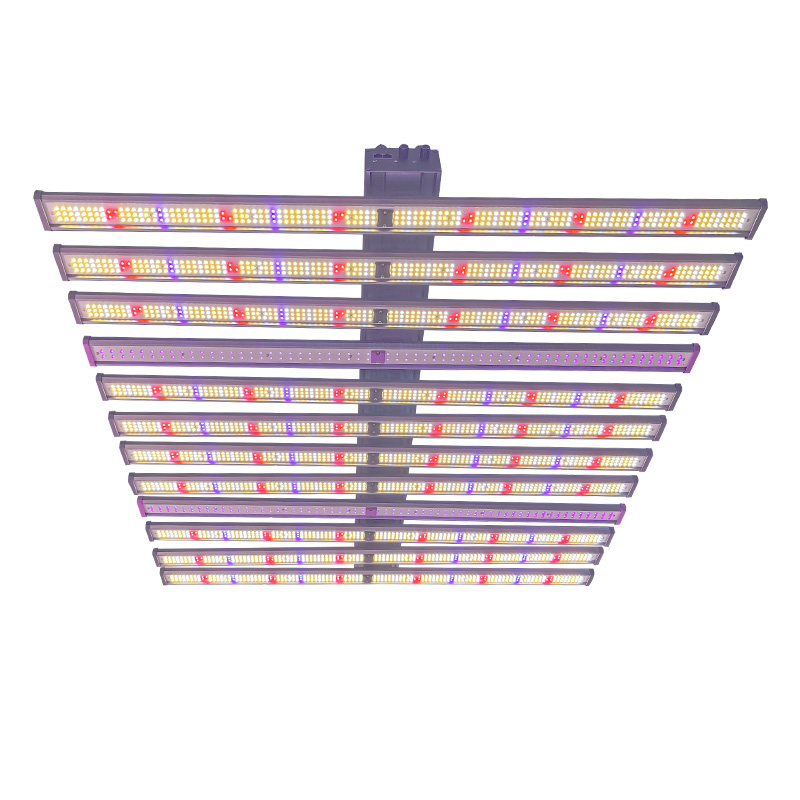
Uneven light creates hot spots in the center. It also creates weak growth at the edges. Bar-style distribution helps spread light across the canopy. This is important for indoor farms where consistent flower and biomass development matter.
Better Heat Management Helps Maintain Stable Output
Heat affects stability. ANDYLED uses aluminum fixture construction. This supports heat dissipation during long daily photoperiods. Growers still need good airflow. They need humidity control and environmental balance. Yet efficient fixture design helps reduce unnecessary stress around the canopy.
Correct Hanging Height Can Improve Real PPFD at the Canopy
A light that is too close may stress plants. A light that is too far may waste intensity. The best setup depends on crop stage, canopy height, and target PPFD. For many growers, dimming plus correct height is more valuable than simply buying the highest-watt option.
How Should Growers Match LED Grow Light Wattage to Grow Space?
How to Think About LED Grow Light Coverage for 4×4 and 4×6 Areas
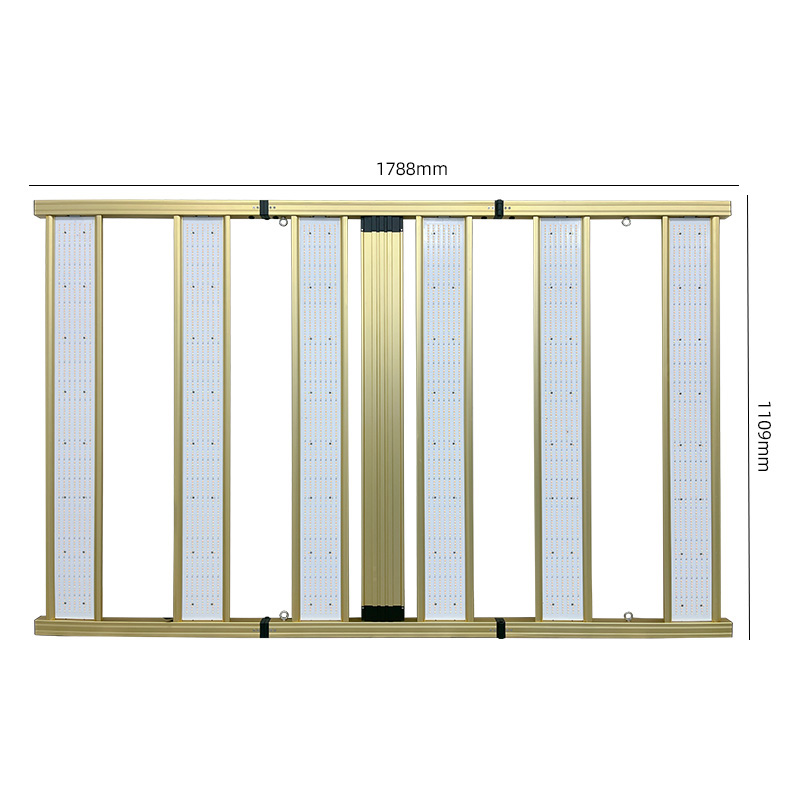
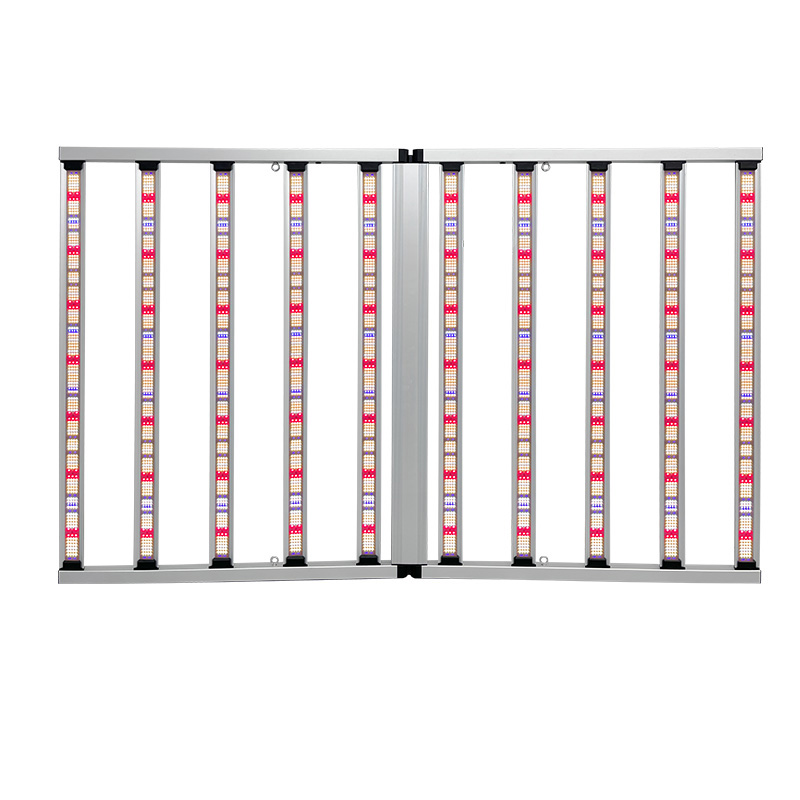
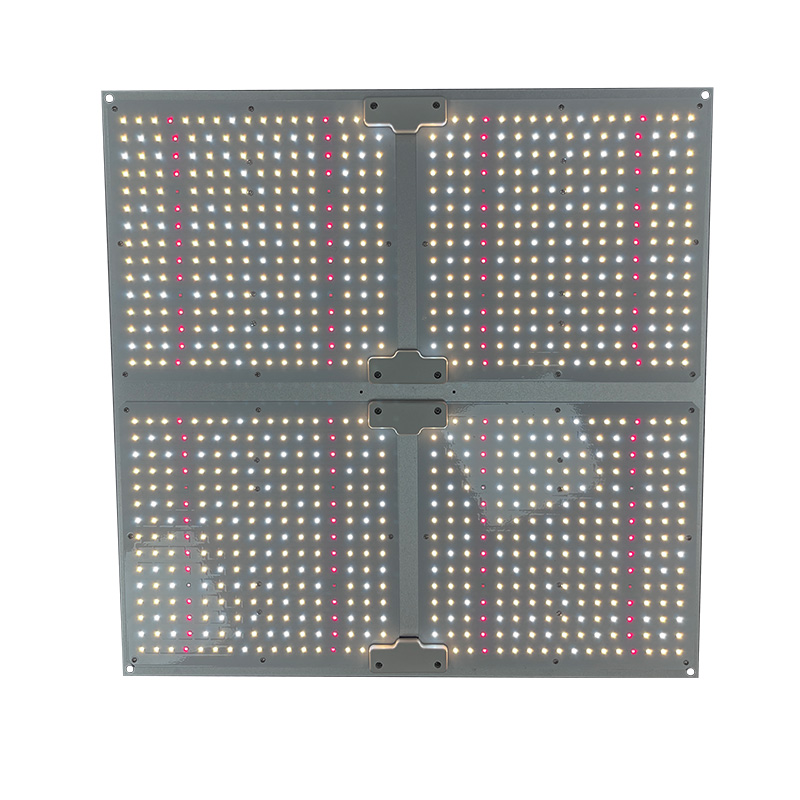
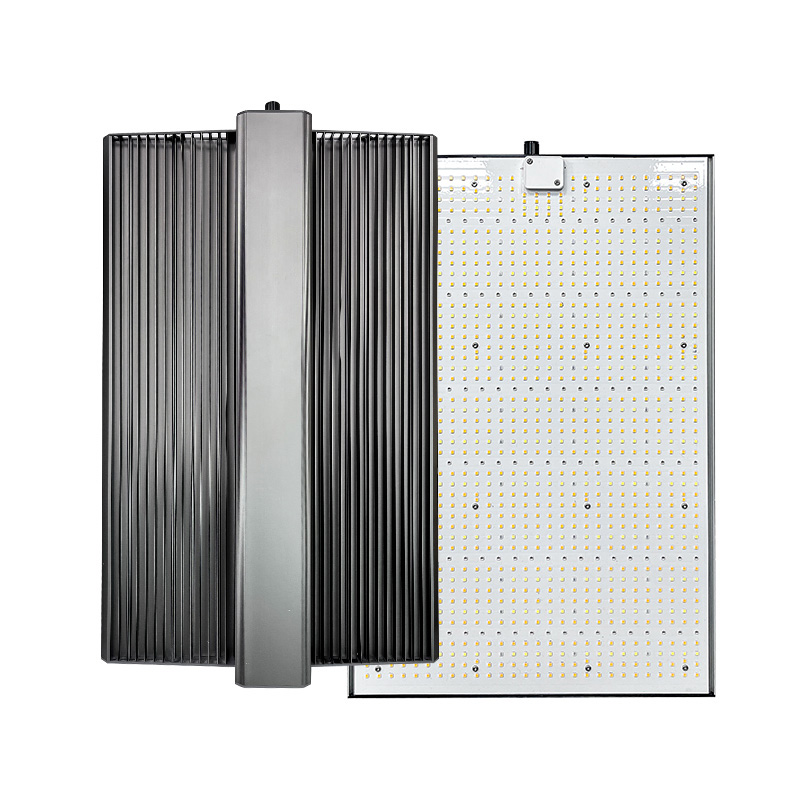
For 4×4 spaces, the 800W Single Channel Dimming LED Grow Light for 4×4(ft) is a practical choice. It suits growers who want strong intensity without oversizing the system. For larger 4×6 cultivation zones, the 1000W 4x6ft LED Grow Light-AD10-1000-2C2-180 offers more output. It keeps stage-based control at the same time.
For growers needing higher total light in a larger canopy, our 1200W Single Channel Dimming LED Grow Light for 4×6 ft can make sense. This works when the environment can support high PPFD, CO₂ strategy, airflow, and dense plant spacing.
Why PAR Maps Matter More Than Wattage Claims
Before choosing any fixture, commercial growers should ask one question. Where does the light go? A PAR map reveals edge performance. It shows center intensity and uniformity. This gives a clearer answer than wattage alone.
How Canopy Size, Crop Stage, and Plant Density Change Light Needs
Seedlings need lower intensity. Vegetative growth needs more stable coverage. Flowering crops usually require stronger PPFD and a carefully managed photoperiod. A dimmable system lets growers increase intensity gradually. They avoid shocking plants this way.
Why Commercial Growers Should Plan by Zones, Not Single Fixtures
Large farms should think in lighting zones. Each zone may have a different crop height. It may show different cultivar behavior and environmental needs. Planning by zone helps avoid over-lighting one area. It also prevents under-lighting another area.

What Makes a High-Efficiency LED Grow Light Better for Plant Growth?
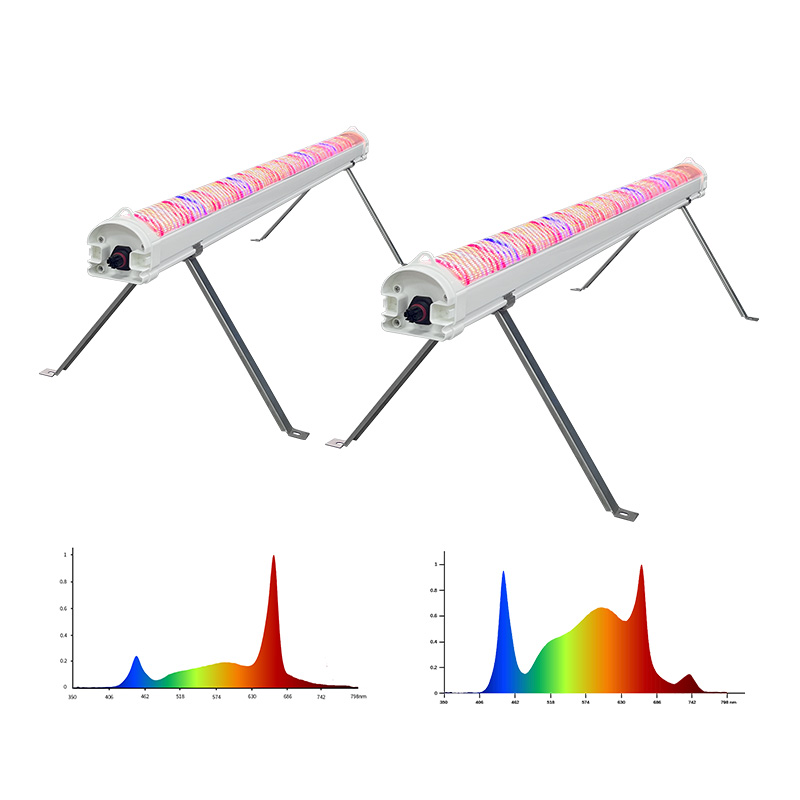
Balanced Full Spectrum for Vegetative and Flowering Stages
A good spectrum supports root development. It helps leaf structure, flowering, and final quality. ANDYLED focuses on cannabis farm lighting. It also supports vegetables, fruits, flowers, greenhouses, vertical farms, hydroponics, and research planting environments.
Dimming Control for Seedling, Veg, Bloom, and Harvest Needs
Dimming is not just a convenience. It helps growers match LED grow light coverage and intensity to each crop stage. This reduces wasted energy. It improves plant comfort as well.
Stable Light Output for Long Daily Photoperiods
Commercial growers often run fixtures for long hours. Stability, heat dissipation, and fixture durability all affect performance over time.
Durable Fixture Design for Greenhouse and Indoor Farm Conditions
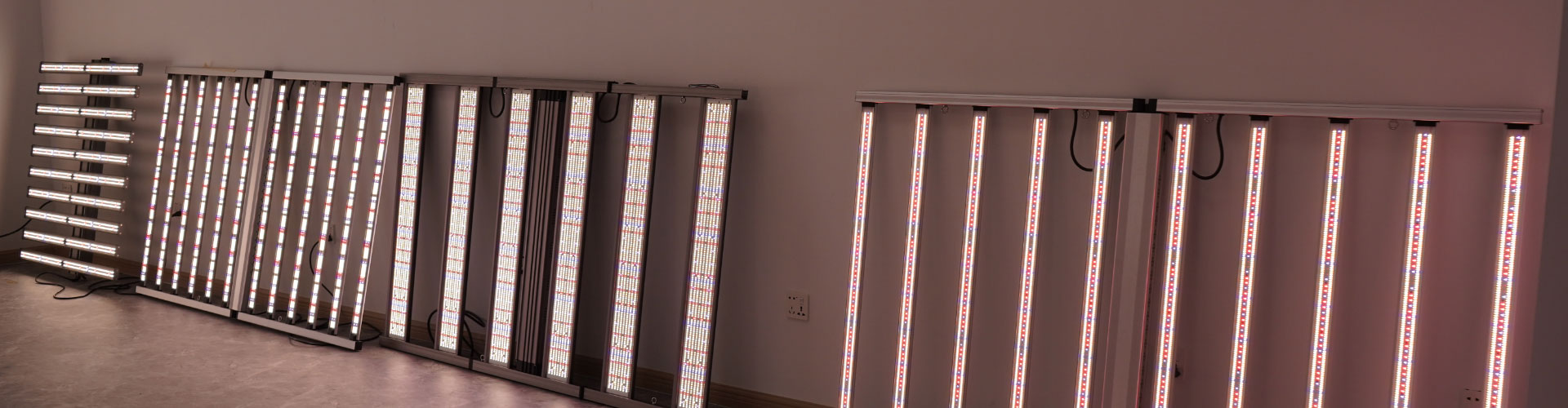
We have a large workshop. We offer integrated production from LED mounting to final assembly. We maintain strong warehouse capacity and abundant raw materials. With high production capacity in Shenzhen, we can support fast customization. We can provide full-container delivery in about 5 days. This helps farm clients move quickly from planning to installation.
How Can Commercial Growers Avoid Buying the Wrong LED Grow Light?
Compare Actual Power Draw Instead of Marketing Wattage
Do not choose only by the biggest watt number. Compare true power draw, PPF, PPE, and PPFD data together.
Check PPE, PPF, and PPFD Together Before Choosing
A smart grower asks three questions. How much light is produced? How efficiently is it produced? How much reaches the canopy?
Match Light Intensity to Crop Stage and Environmental Control
Highlight only works when temperature, humidity, airflow, nutrients, and CO₂ are also managed well. Otherwise, extra wattage may create stress instead of better growth.
Choose Scalable Lighting for Larger Indoor Growing Systems
For farm expansion, scalable bar-style lighting gives growers more control over layout. It improves spacing and crop-stage planning. That is more valuable than simply chasing higher wattage.
FAQ
Q: Does higher wattage mean better LED grow light efficiency?
A: No. Higher wattage means higher power use. It does not automatically mean higher efficiency. LED grow light efficiency depends on PPE, PPF, PPFD, distribution spectrum, and how well the fixture matches the grow space.
Q: Can an 800W LED grow light be better than a 1200W LED grow light?
A: Yes. An 800W LED grow light can perform better when it has higher efficiency. It can do so with more even coverage and better canopy-level PPFD for the target area. ANDYLED’s 800W Single Channel Dimming LED Grow Light for 4×4(ft) is designed for this type of space-matched performance.
Q: What is the best LED grow light wattage for a 4×4 grow space?
A: For many commercial 4×4 setups, an 800W LED grow light can provide strong intensity with dimming control. The key is to check PPFD coverage uniformity, crop stage, and environmental conditions. Growers should avoid choosing by wattage alone.
Q: What is the best LED grow light wattage for a 4×6 grow space?
A: A 4×6 space often needs higher total output than a 4×4 area. An Efficient 1000W LED Grow Light with Adjustable Brightness for 4×6(ft) or a 1200W single-channel option can be considered. The choice depends on plant density and target PPFD.


