
800W vs 1000W LED Grow Lights for Cannabis Grow Rooms in 2026
Choosing between an 800W and a 1000W LED grow light is not simply a decision to buy more power. The useful question is whether the fixture’s photon output and footprint match the canopy, room geometry, growth stage, and environmental capacity. A well-matched 800W fixture can outperform a poorly placed 1000W fixture in a smaller bay, while a wider bench may need the larger unit to avoid weak edges.
800W vs 1000W LED Grow Lights: What Actually Changes in a Cannabis Grow Room?
The Difference Between Input Wattage, PPF, PPFD, and DLI
Input wattage describes electrical demand and helps calculate circuit load, cost, and room heat; it does not show how many useful photons reach the crop. PPF measures total photosynthetic photon output, while efficacy shows how many micromoles the fixture produces per joule.
PPFD measures photon density at a point on the canopy. DLI combines average PPFD with the photoperiod to describe the daily dose. Compare verified input power and PPF first, then examine a complete map at the intended height. This guide to PAR and PPFD explains the measurements.
Why Canopy Uniformity Matters More Than the Highest Center Reading
A strong center reading can hide dim corners. Because cannabis is harvested across the bench, an overlit center does not cancel weak edges. Compare average and minimum PPFD plus variation across the grid. Maps must use the same area and height.
Uniformity also affects irrigation and labor. Plants receiving different daily doses may transpire and mature at different rates. A slightly lower but consistent average can be more useful than a higher average with a severe hotspot.
Which Coverage Area Fits an 800W or 1000W LED Grow Light?
When an 800W LED Grow Light Fits a 4×4 Cannabis Canopy
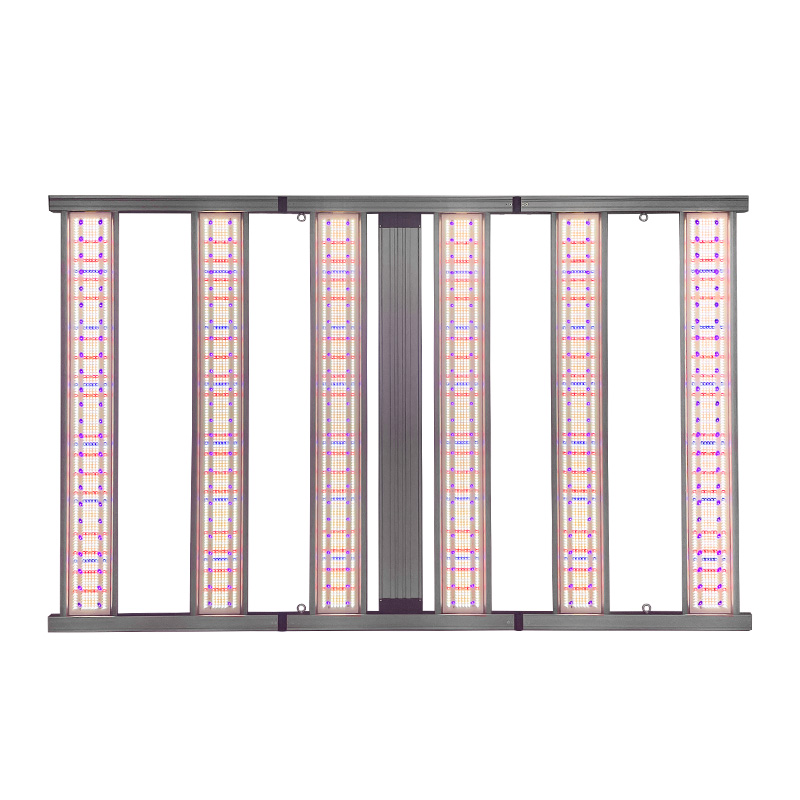
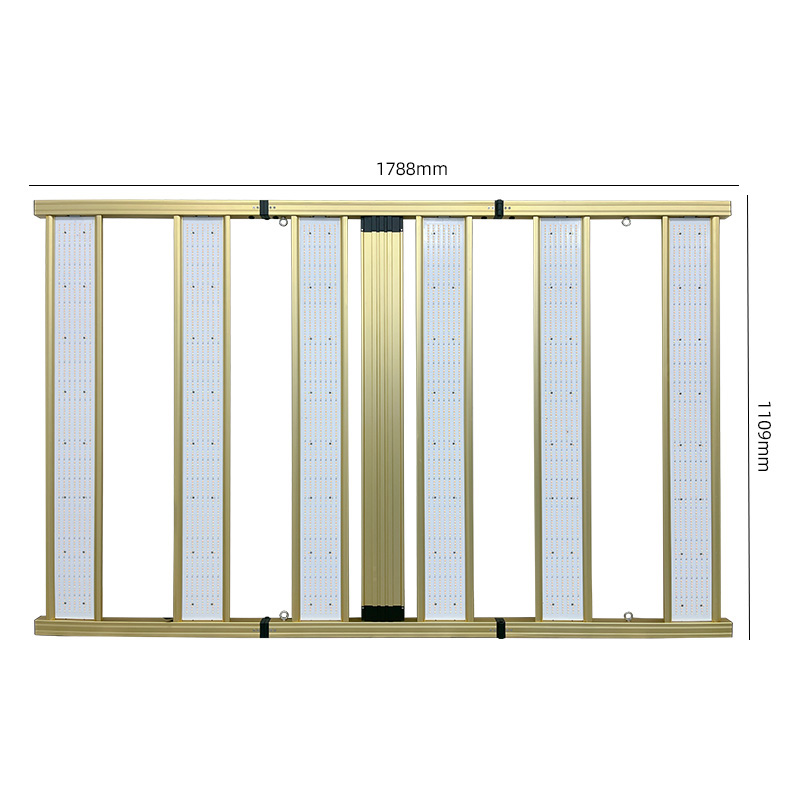
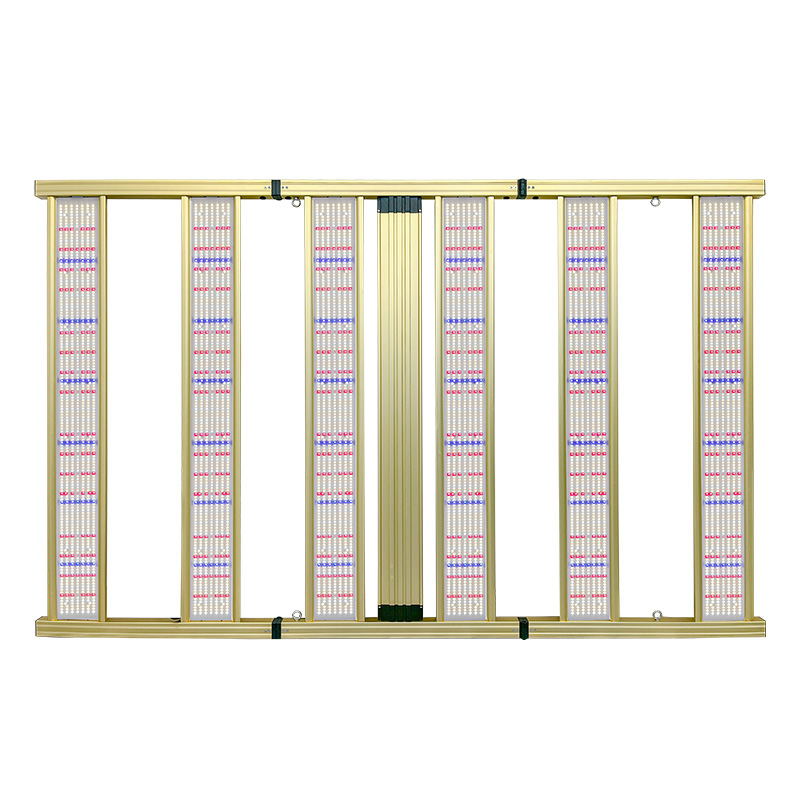
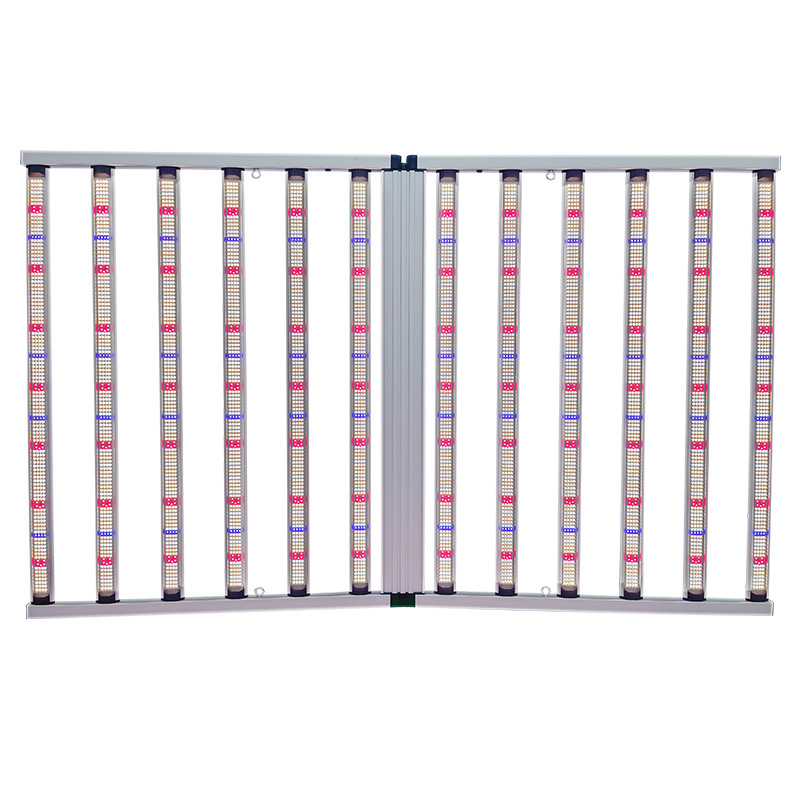
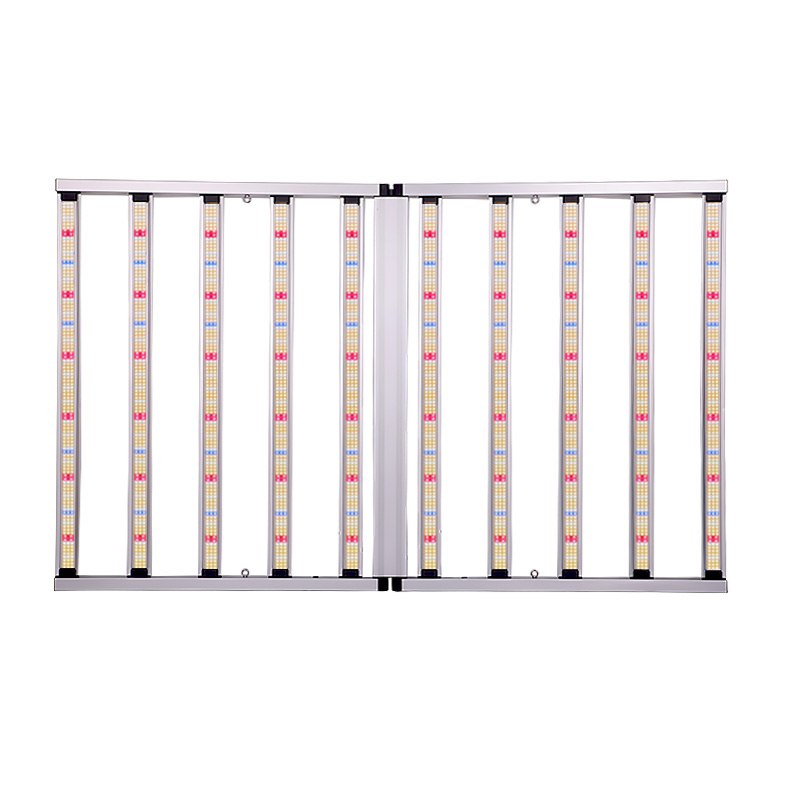
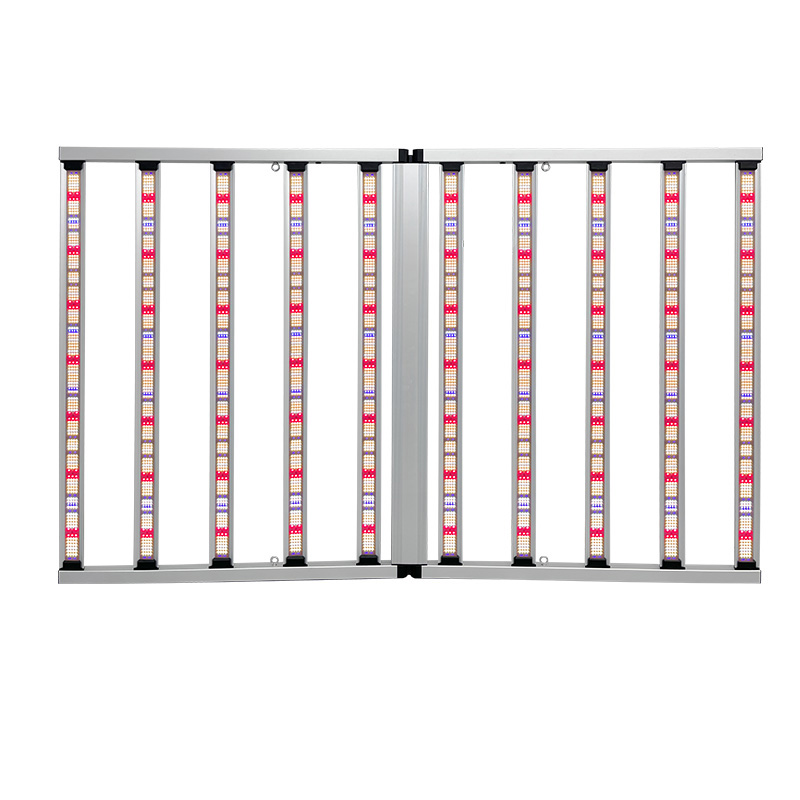
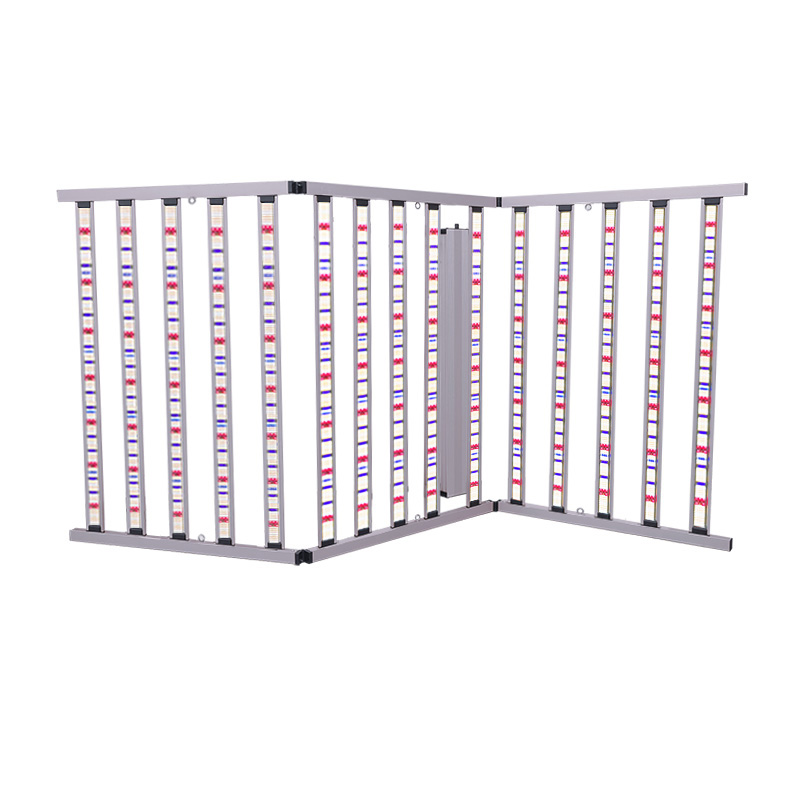
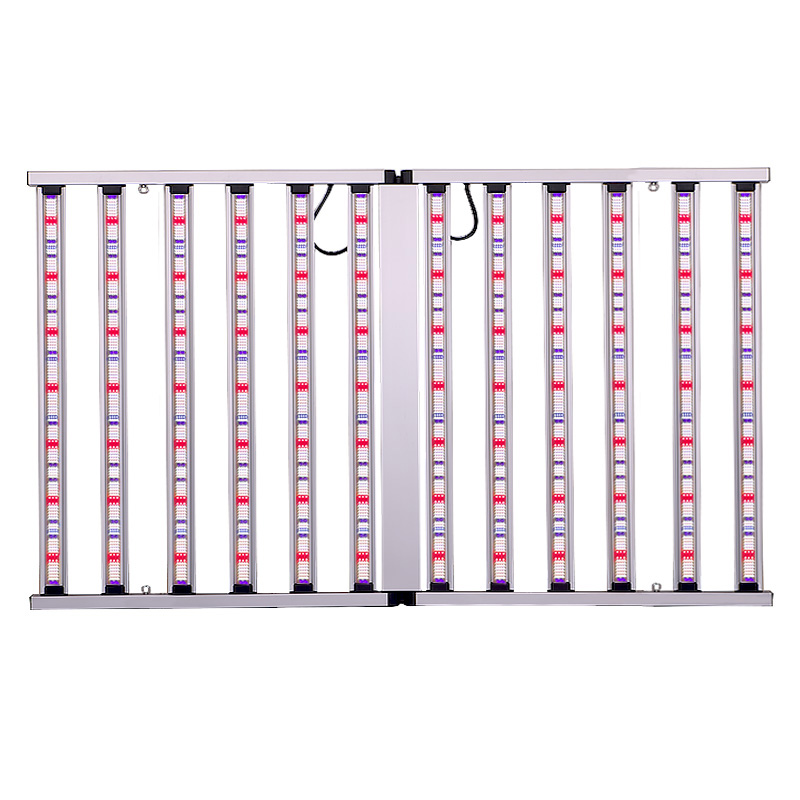
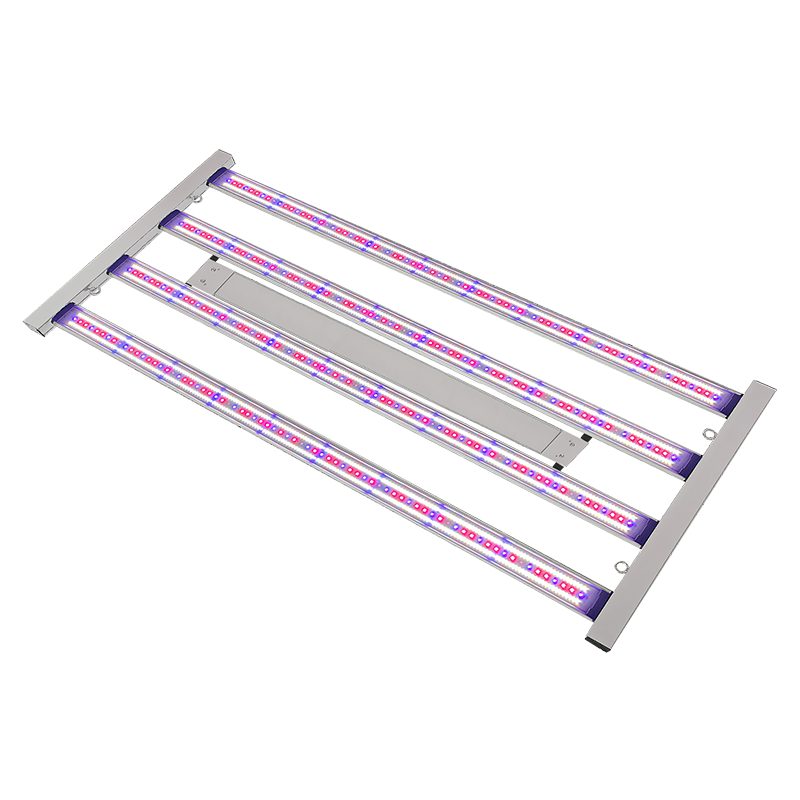
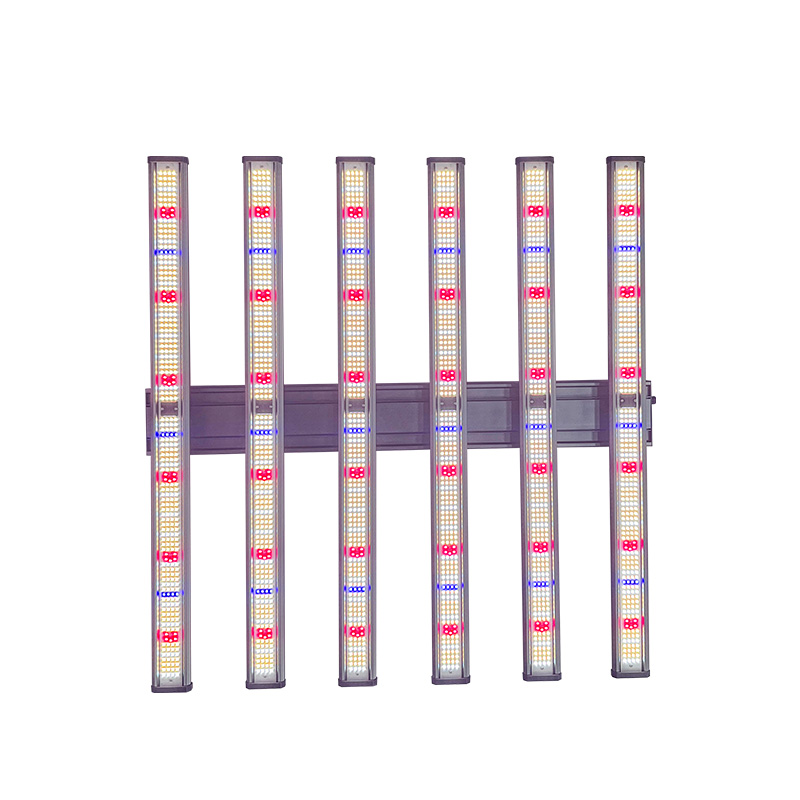
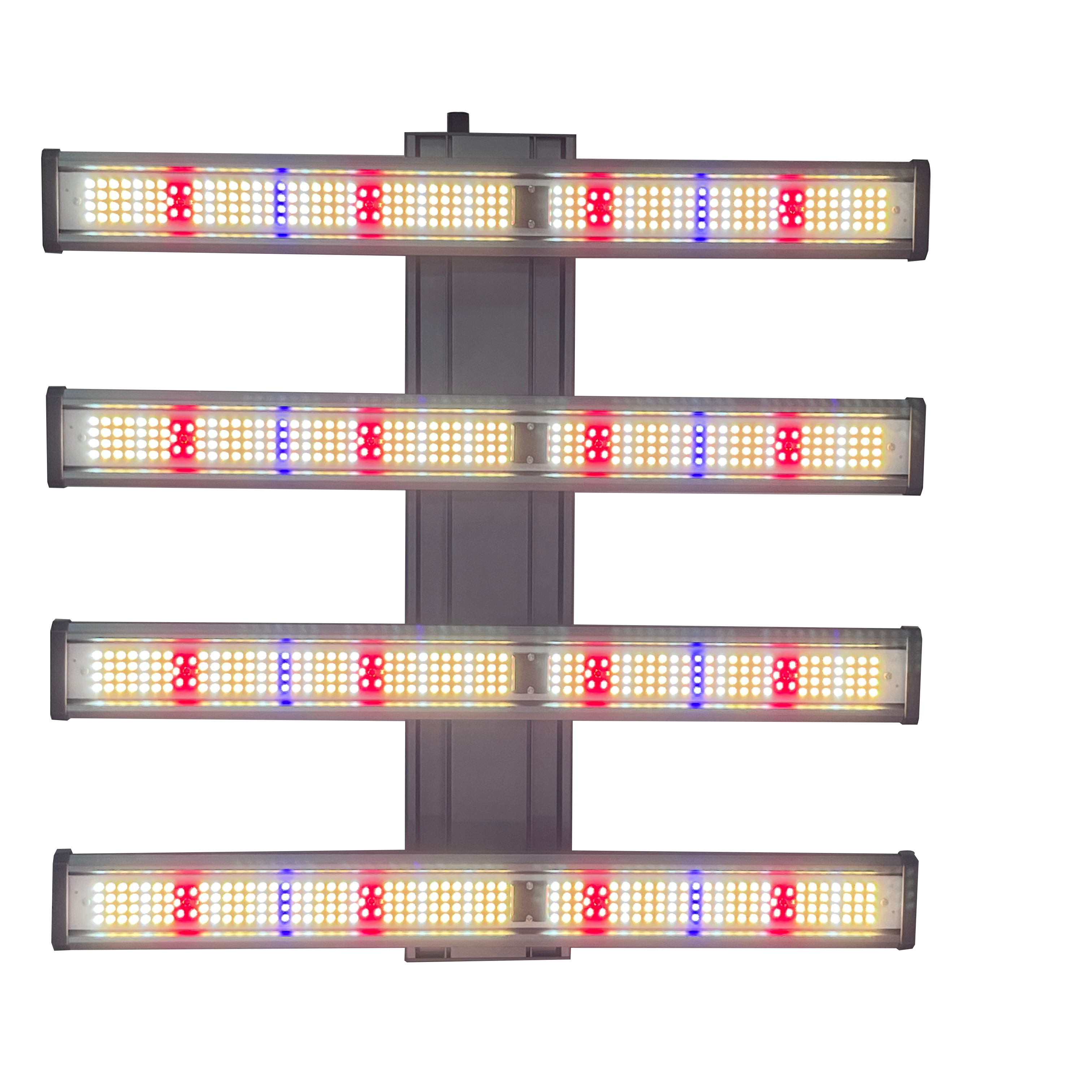
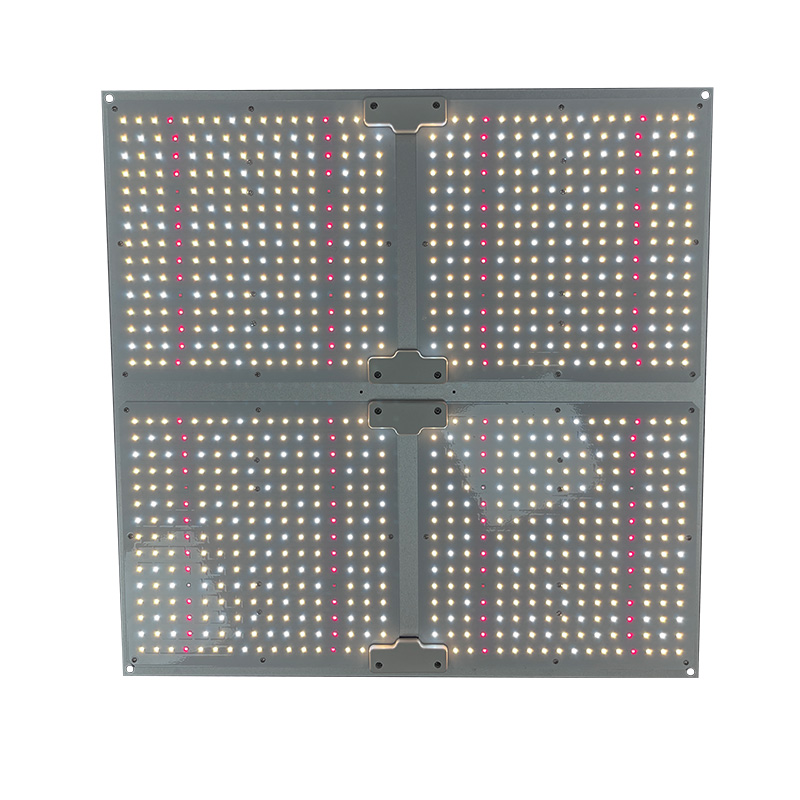
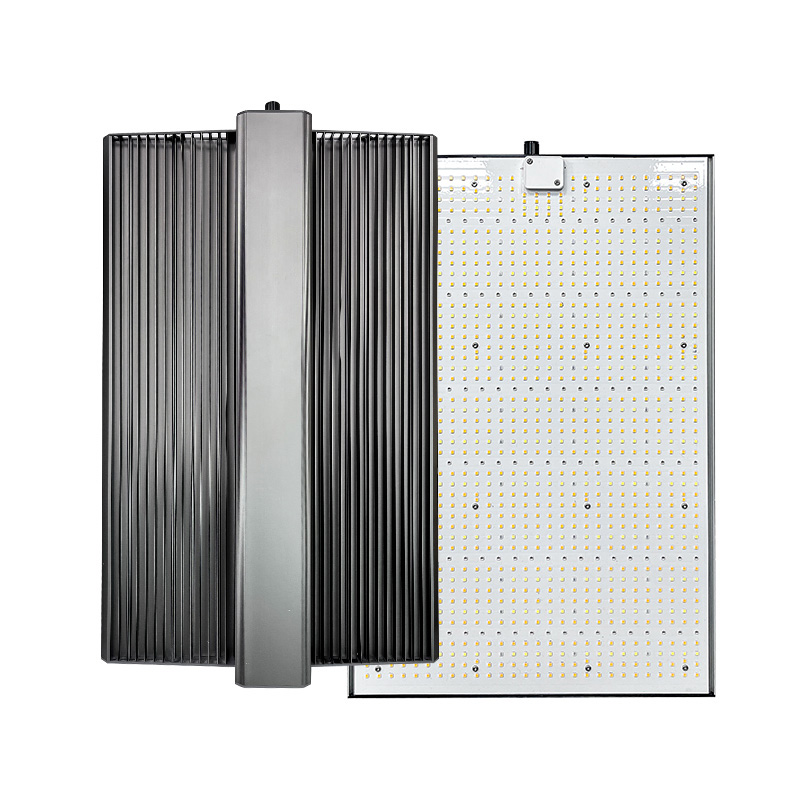
A 4×4 bay is 16 square feet. An 800W bar fixture is a practical match when it distributes light across the square instead of concentrating output in the middle. ANDYLED positions its 800W LED grow light for 4×4 ft coverage as a foldable, single-channel dimming option.
This pairing suits standardized rooms where benches and crop recipes repeat. Full output is not mandatory: dimming lets the fixture remain installed while intensity changes with crop stage.

When a 1000W LED Grow Light Fits a 4×6 Cannabis Canopy
A 4×6 bench contains 24 square feet, 50% more canopy than a 4×4 bay. Consider the added 200 watts with the frame and coverage geometry, not as a promise of proportionally higher PPFD everywhere.
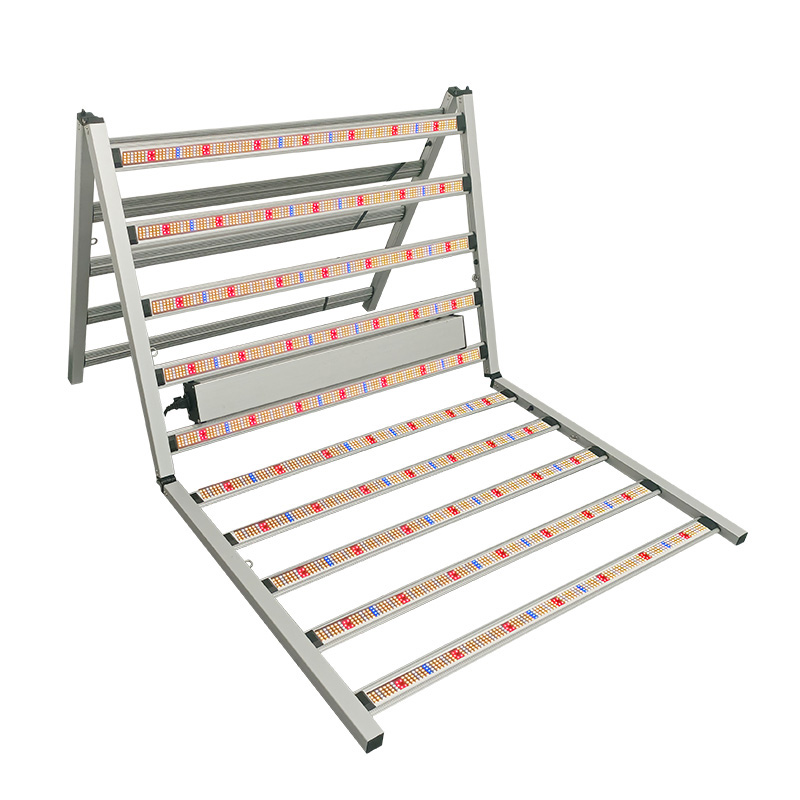
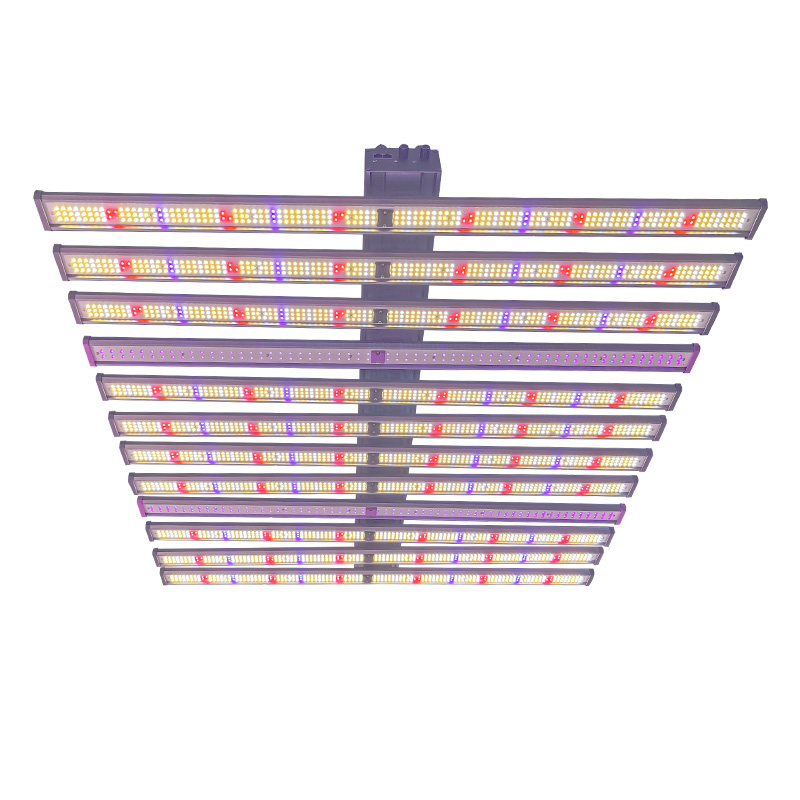
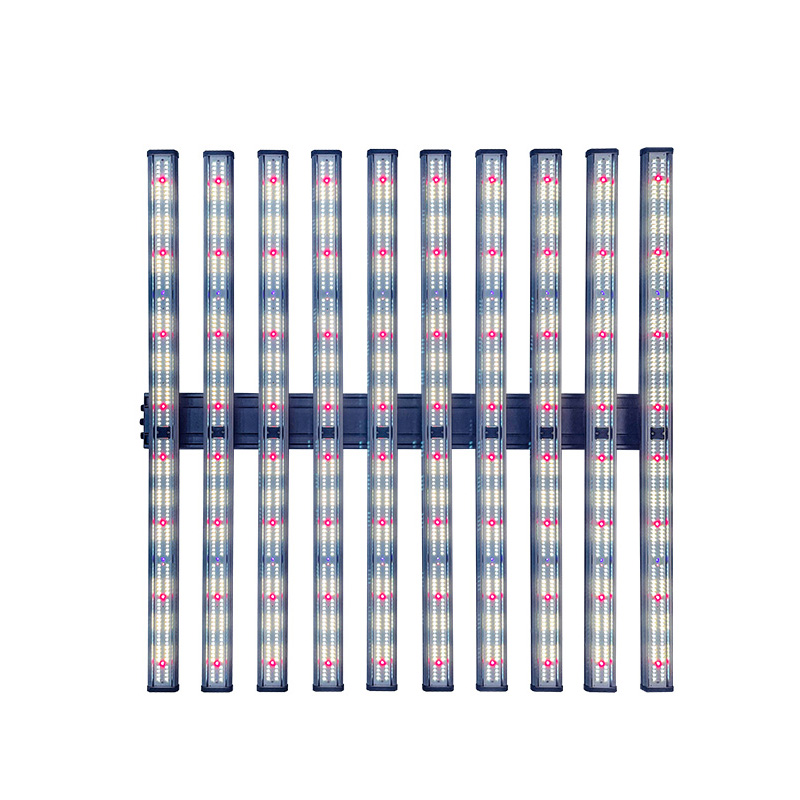
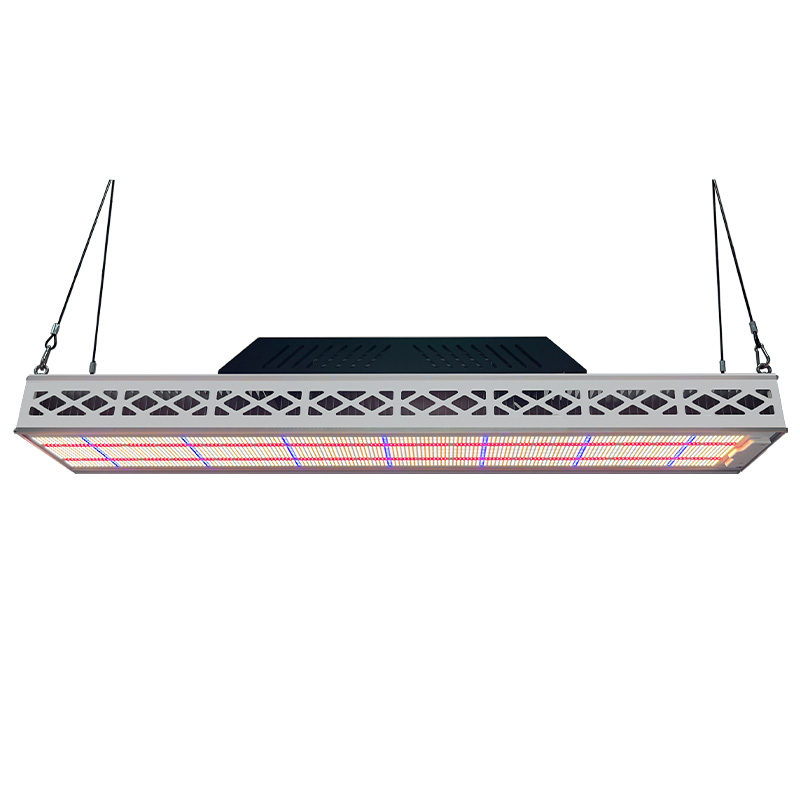
The ANDYLED 1000W LED grow light for 4×6 ft coverage uses a ten-bar layout, adjustable output, and a listed PPF of 3000 micromoles per second. It fits longer benches needing continuous coverage. Our goal is to match light to planted area instead of illuminating aisles.
How Bench Layout, Aisles, and Plant Density Change Fixture Requirements
Room area is not canopy area. Exclude aisles, service gaps, columns, and unplanted margins before calculating fixture count. Consider rolling-bench movement and overlap between neighboring fixtures.
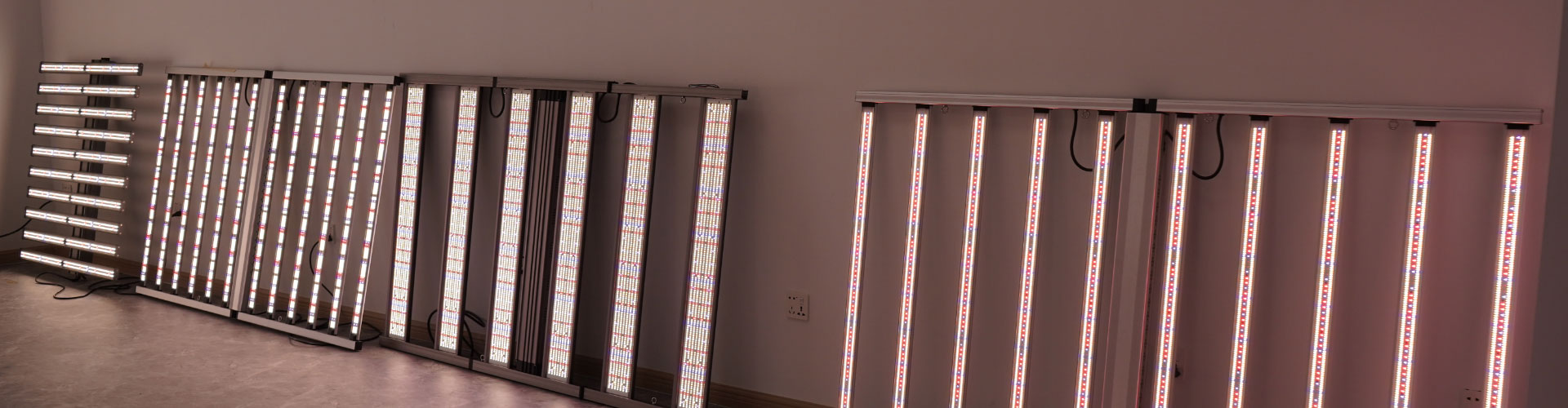
Dense canopies may justify more photons, but density cannot repair poor distribution. A bar-style lighting layout should coordinate fixture width, bar spacing, height, airflow, and worker access. Room-level planning prevents wasted light.
How Do 800W and 1000W Fixtures Perform Across Cannabis Growth Stages?
Seedling and Vegetative Stages: Use Dimming Instead of Full Output
Young plants need less intensity than a flowering canopy. Maximum output can waste electricity and complicate irrigation or temperature management. Maintain enough height for good spread and use the dimmer to reach a measured target.
This is more repeatable than constantly moving fixtures. Establish settings for propagation and vegetative rooms, then verify them with a quantum sensor. See these grow-light strategies for seedlings.
Flowering Stage: Match PPFD and DLI to the Cultivar
Flowering reduces the photoperiod, so higher PPFD may be needed to reach the intended DLI. The target still depends on cultivar, canopy health, CO₂, irrigation, and climate control. Increase output gradually and judge representative points.
Record dimmer setting, height, grid readings, photoperiod, and crop response. This creates a repeatable recipe and helps separate fixture problems from crop-management problems.
When Higher Light Intensity Requires CO₂ and Tighter Environmental Control
Higher intensity helps only when the environment supports it. Advanced flowering intensities may require supplemental CO₂, faster irrigation response, stronger dehumidification, and tighter leaf-temperature control.
A 1000W fixture is not automatically better. If the room cannot manage the load or the cultivar cannot use the extra photons, a dimmed setting or 800W layout may be better balanced.
How Do Heat Load, Hanging Height, and Airflow Affect the Choice?
Comparing Grow Room Heat Load Without Treating Wattage as Canopy Light
At full output, the difference is approximately 200 watts per fixture, or roughly 682 additional BTU per hour for the cooling plan. Multiply by fixture count and include other electrical equipment.
Keep this separate from canopy-light calculations. Wattage sizes electrical and thermal systems; PPF, PPFD maps, and DLI evaluate crop lighting. Mixing them can produce undersized HVAC or unjustified performance expectations.

Setting Hanging Height for Uniform PPFD and Fewer Hotspots
Lowering a fixture raises center intensity but may worsen edge falloff. Raising it can improve spread, although average intensity may decline. Start with the manufacturer’s map and reproduce its conditions.
Set height for uniformity first, then use dimming for fine control. This is safer than chasing a center number by moving the fixture too close.
Coordinating Airflow, Humidity, and Canopy Temperature
Open bar spacing helps air move, but it does not replace circulation, cooling, or dehumidification. Check for stagnant zones where fixtures, ducting, and trellises interact.
Track canopy temperature as output changes. More light can increase transpiration even when air stays near setpoint. The choice must fit lights-on cooling and lights-off humidity control.
Which LED Grow Light Is Better for Your Commercial Cannabis Facility?
Choose 800W for Standardized 4×4 Bays and Stage-Based Dimming
Choose 800W when the footprint is a repeatable 4×4 square, the verified map meets the crop target, and the facility uses stage-based dimming. Fixture and bench boundaries align cleanly in modular rooms.
Choose a 1000W LED Grow Light for Wider 4×6 Benches
Choose 1000W when the bench is genuinely 4×6, edge readings are acceptable, and electrical and HVAC systems support the load. The reason is usable coverage—not the appeal of a larger label.
Use a Pre-Purchase Checklist for Performance, Safety, and Scalability
Verify Average PPFD, Edge Readings, and Coverage Uniformity
Request a PPFD map showing grid spacing, height, dimmer setting, coverage, and reflectivity. Compare average, minimum, and maximum readings, then test after installation.
Confirm Efficacy, Dimming Range, and Electrical Compatibility
Verify input wattage, PPF, efficacy, dimming, voltage, current, plugs, and control protocol. Confirm circuit capacity and synchronized-control compatibility.
Check Warranty, Moisture Protection, and Multi-Fixture Control
Review warranty terms, moisture rating, cleaning, driver access, controller compatibility, parts, and supplier capacity. ANDYLED has focused on LED grow-light research, development, production, and sales for more than a decade. We support commercial cannabis farms with foldable bar fixtures and scalable 4×4 and 4×6 lighting plans.
FAQ
Q: Is an 800W LED grow light enough for a 4×4 cannabis grow room?
A: It can be enough when a verified PPFD map shows suitable average intensity and edge coverage at the planned hanging height. Dimming also allows one fixture to serve multiple stages.
Q: Is a 1000W LED grow light too powerful for a 4×4 cannabis canopy?
A: It may be unnecessarily powerful unless it is dimmed and its distribution suits the space. A wider fixture designed for 4×6 coverage can also waste light beyond a 4×4 canopy.
Q: Does a 1000W LED grow light always produce more cannabis than an 800W fixture?
A: No. Yield depends on usable canopy photons, uniformity, cultivar, environment, irrigation, plant health, and cultivation skill. Higher input power alone does not guarantee higher room output.
Q: How much more heat does a 1000W LED grow light add than an 800W light?
A: At full rated power, the difference of 200 watts equals approximately 682 BTU per hour per fixture. Operating heat differs when either fixture is dimmed.
Q: Should cannabis growers compare LED grow lights by wattage or PPFD?
A: Use wattage for electrical cost and heat planning. Use PPF, efficacy, average PPFD, edge readings, uniformity, and DLI to judge whether the crop receives the required light.


