
Commercial Cannabis Grow Light Buyer Checklist for Farms in 2026
Commercial farms should not approve lighting from wattage, one PPFD reading, or polished product images. A defensible purchase starts with the productive canopy, converts crop goals into measurable light requirements, and tests whether fixtures fit the room, electrical service, climate systems, and compliance rules. Compare suppliers under equivalent conditions. Before a farm-wide order, use a representative sample zone to confirm canopy performance, controls, installation effort, and plant response.
What Should a Commercial Cannabis Grow Light Checklist Define Before Comparing Fixtures?
Map Productive Canopy Area Instead of Total Room Size
Measure benches occupied by plants, not the room’s wall-to-wall area. Exclude aisles, service clearances, perimeter gaps, irrigation equipment, and work zones. Calculate fixture quantities from productive square footage and the proposed coverage pattern. This avoids dark canopy edges and wasted light outside the crop.
Set Target PPFD and DLI for Each Growth Stage
Define separate targets for propagation, vegetative growth, and flowering. Farm-focused guidance treats large foldable fixtures as primary equipment even for seedlings rather than assuming T8 is required. PPFD describes instantaneous photon density; DLI combines intensity with the daily photoperiod. Each room needs an operating recipe, not one maximum setting, so full power is not the automatic default.
Confirm Mounting Height, Bench Layout, and Future Expansion
Record ceiling height, fixture-to-canopy distance, bench width, irrigation lines, racks, sensors, and access routes before requesting a proposal. Add future expansion and likely control-zone boundaries. An open-floor layout can fail when suspension hardware, ducting, or another cultivation bay changes the usable footprint.

Which Cannabis Grow Light Performance Data Should Buyers Verify?
Compare PPF, Photon Efficacy, and Actual Input Power
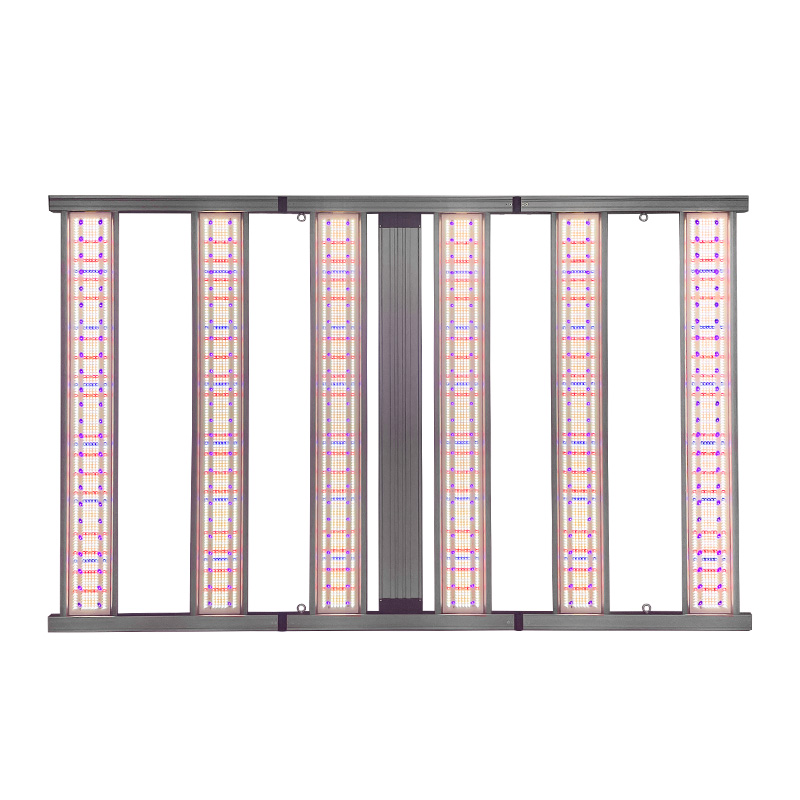
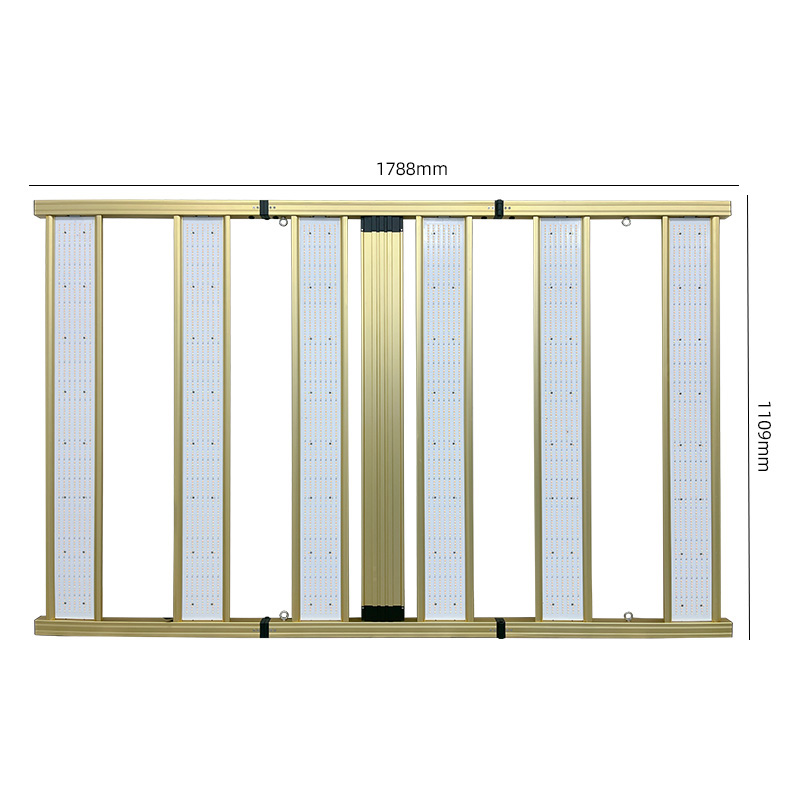
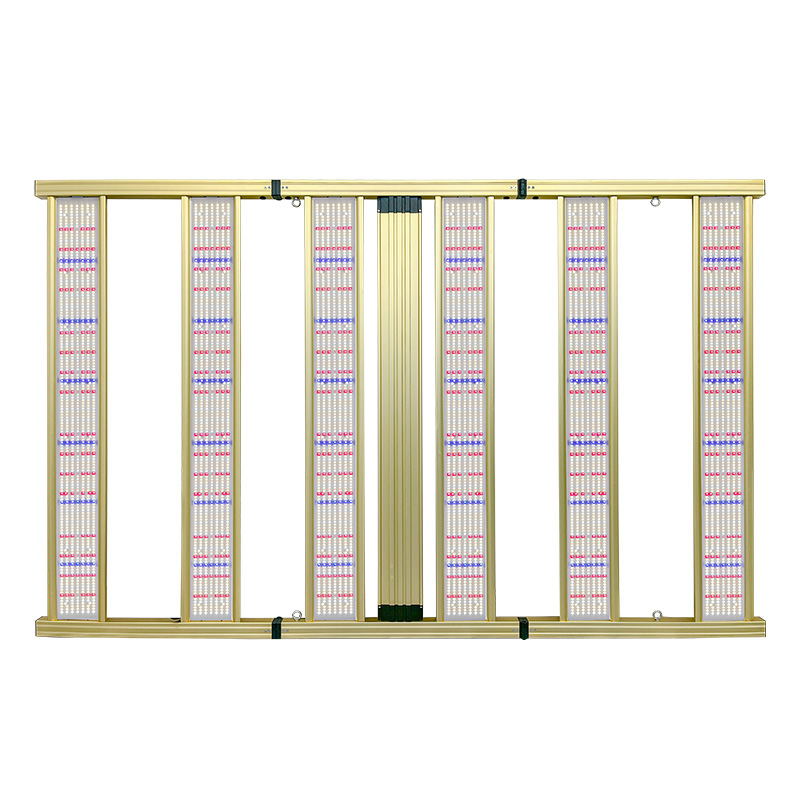
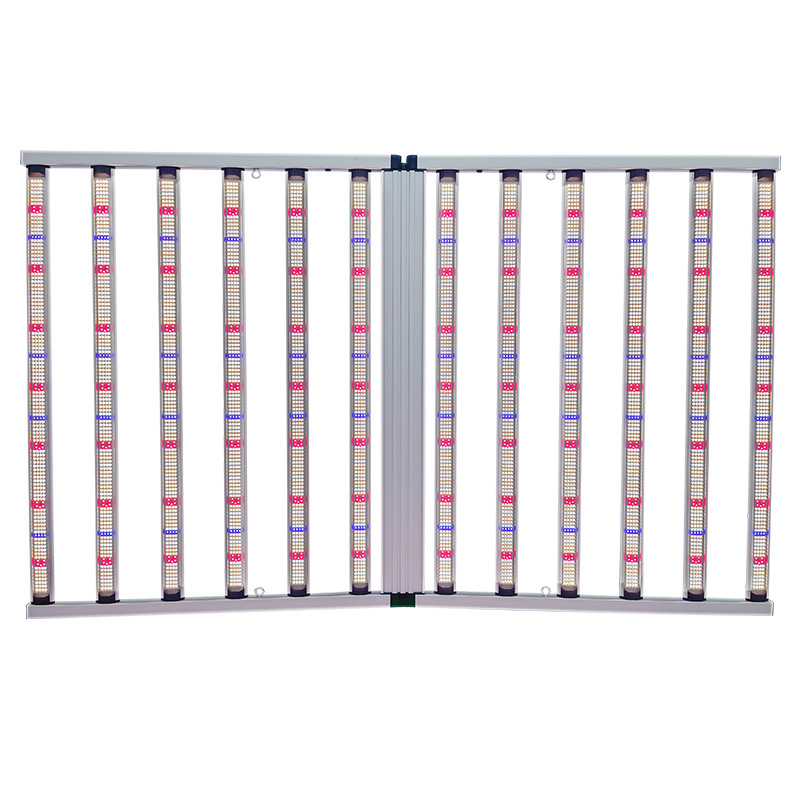
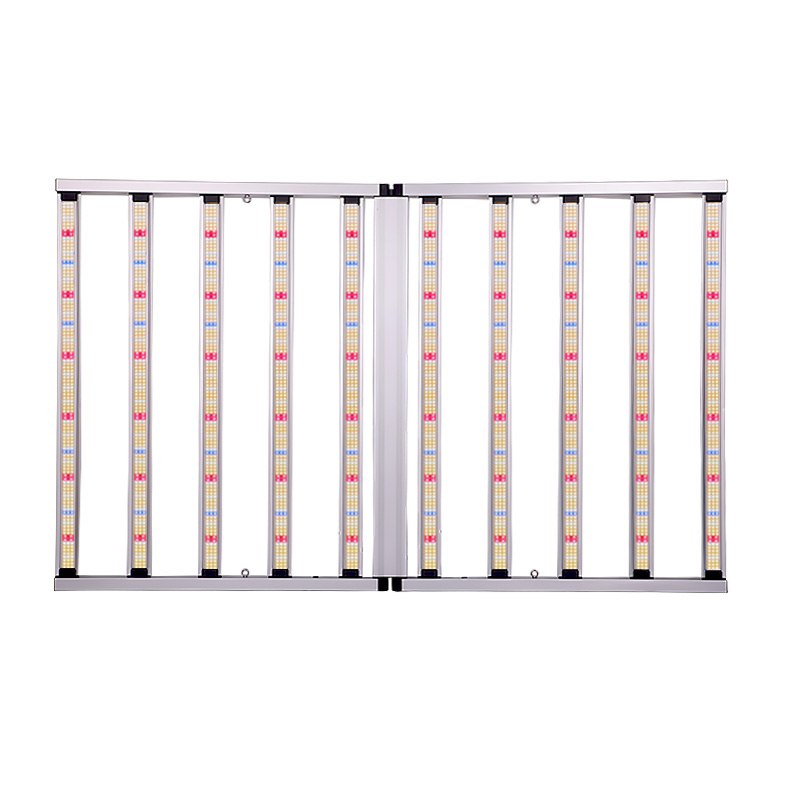
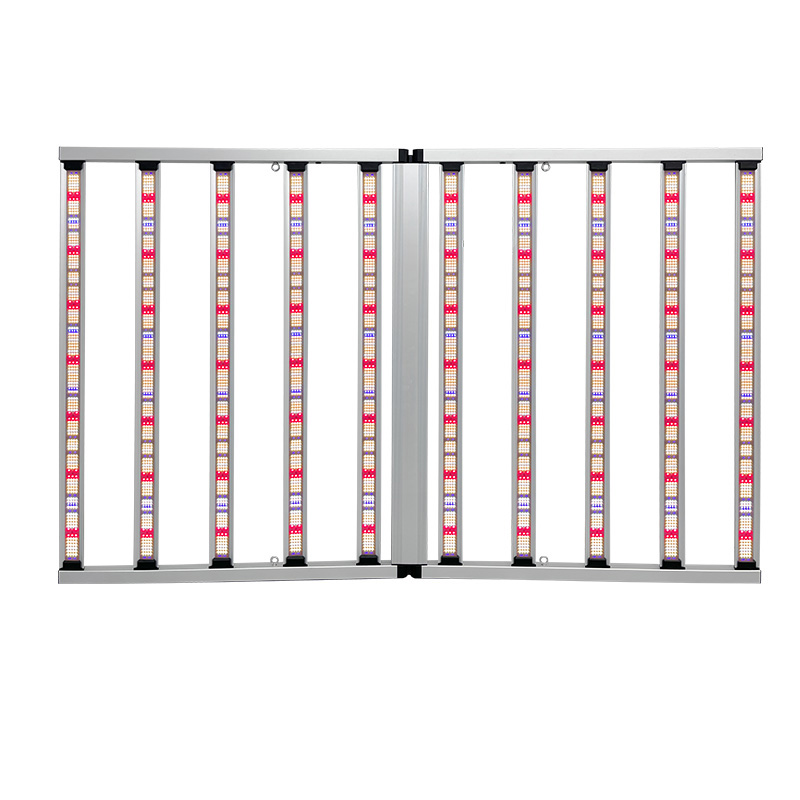
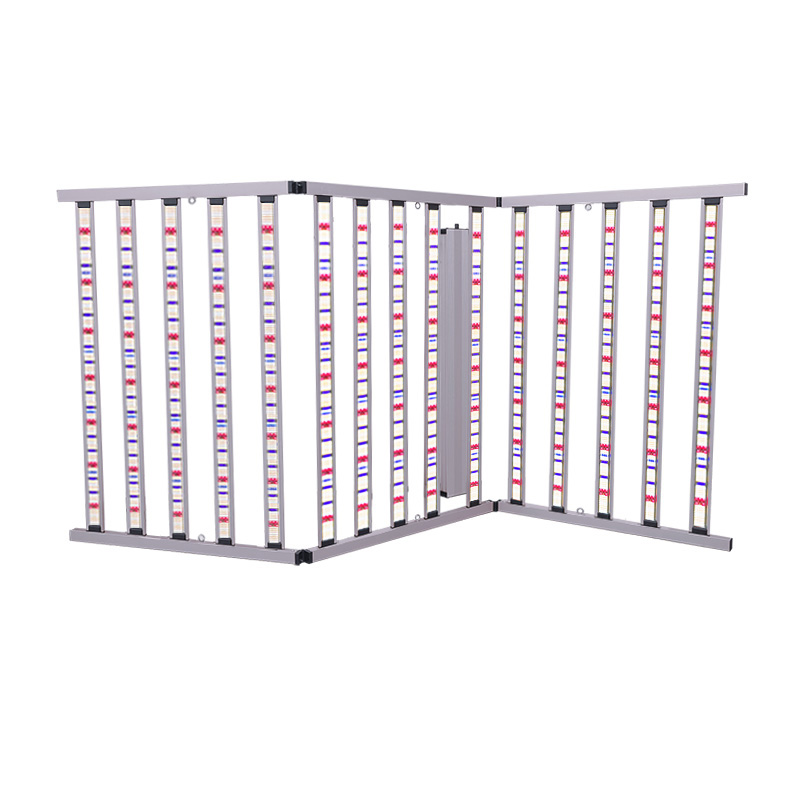
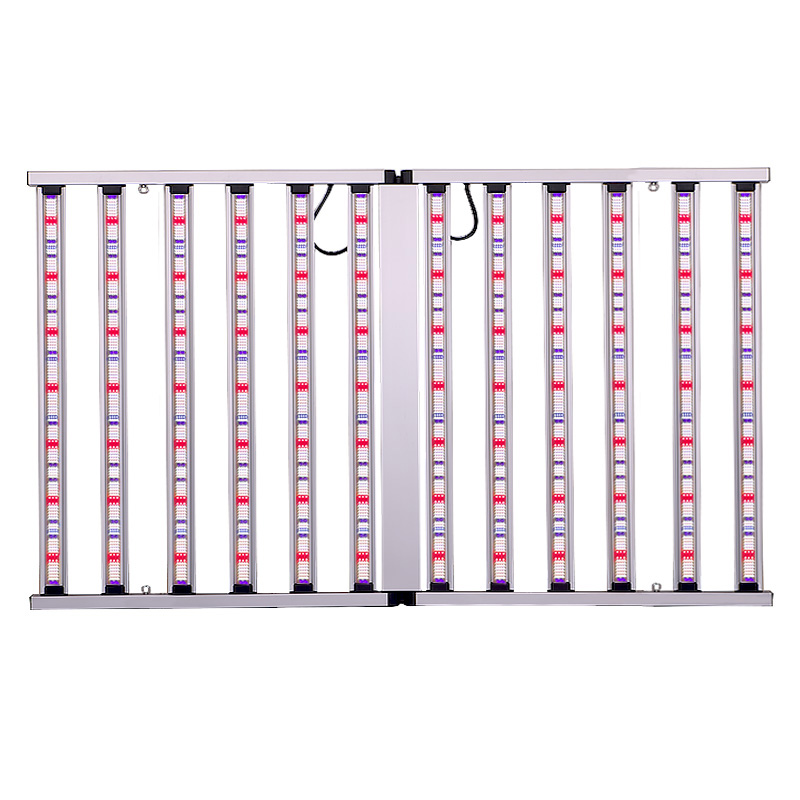
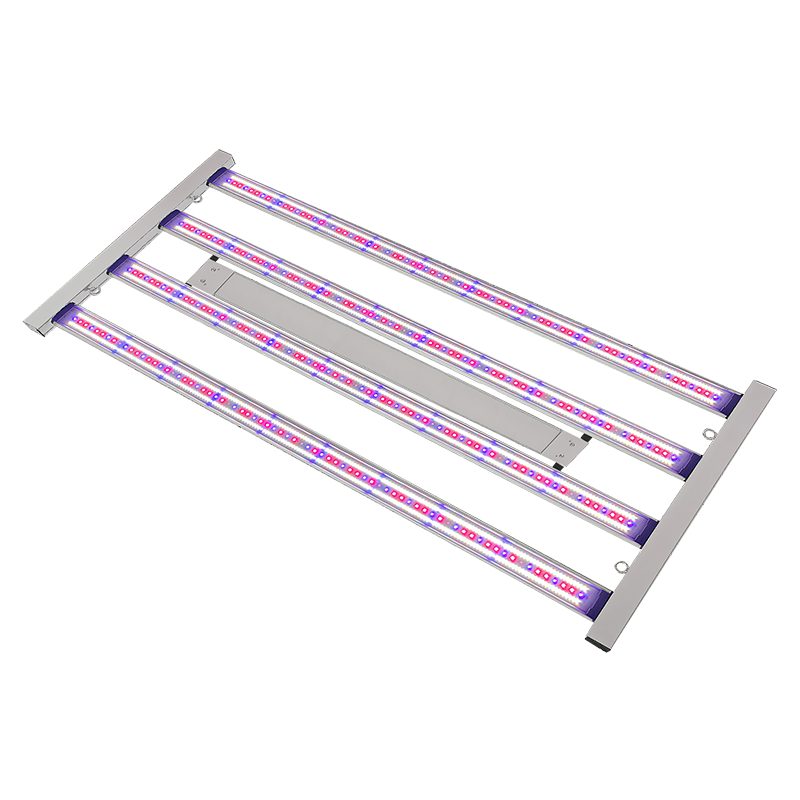
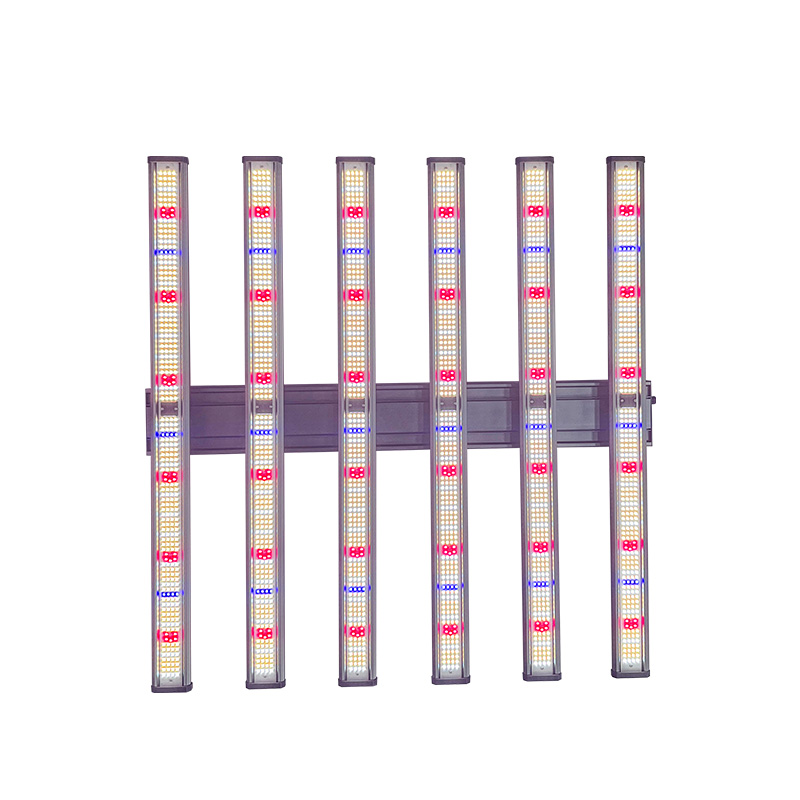
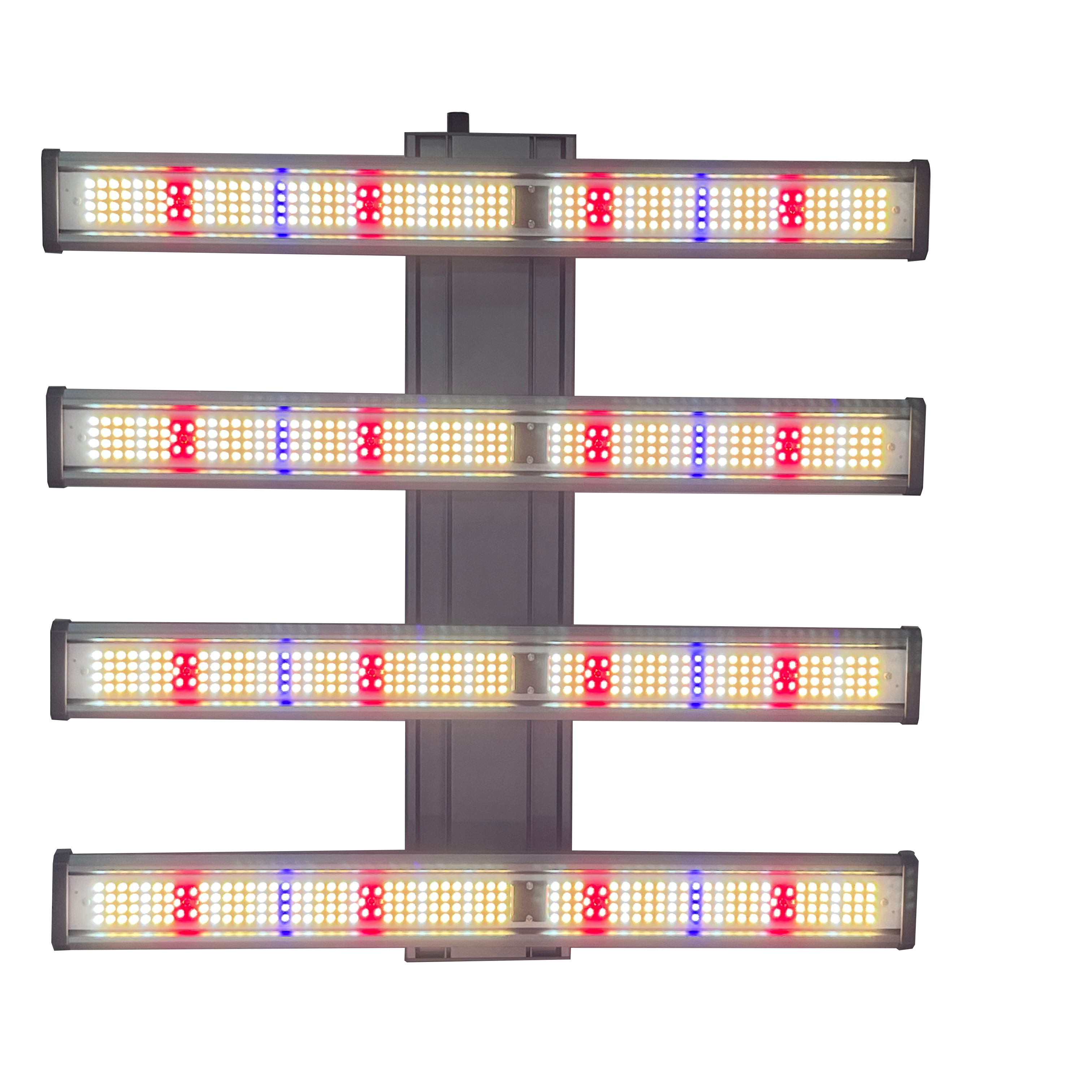
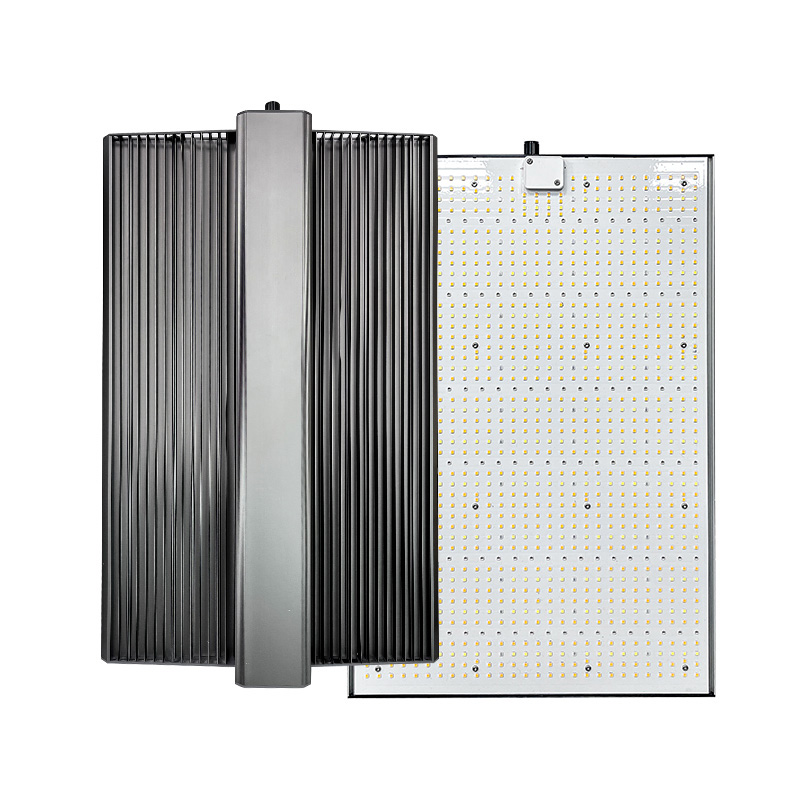
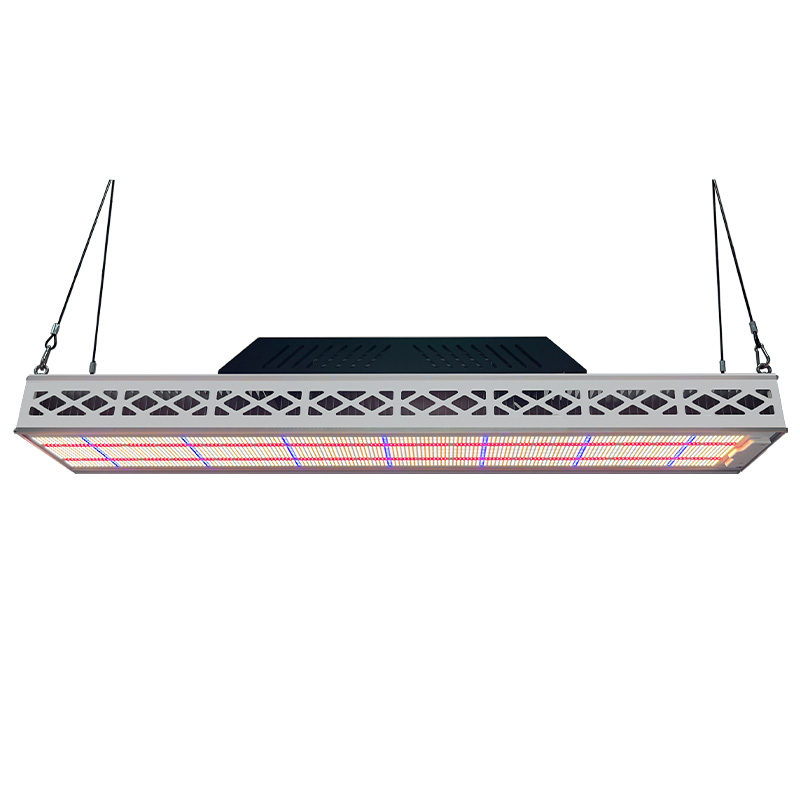
PPF measures total photosynthetic photon output; photon efficacy shows output per unit of energy; actual input power defines electrical and cooling load. Review all three together. The AD10-1000-2C2-180 commercial 4×6 fixture lists its model, 1000W power, PPF, and efficacy together, allowing cross-checking instead of relying on a wattage-based product name.
Request Full PPFD Maps at the Intended Hanging Height
Ask for mapped area, hanging height, measurement grid, fixture orientation, room assumptions, and dimming percentage. A heat map without those conditions is not comparable. Use a PAR and PPFD measurement guide to align terminology, then require each supplier to submit data at the intended height and footprint.
Check Edge-to-Edge Uniformity Instead of Peak Center Readings
Review average, minimum, maximum, corner, and edge readings rather than one center hotspot. Uneven lighting can create inconsistent development across the same bench. A commercial design should keep the useful range stable across the productive canopy and seams between fixtures while leaving margins for airflow and service.
How Should a Cannabis Grow Light Fit the Farm’s Electrical and Climate Systems?
Match Input Voltage, Circuit Capacity, and Control Zones
With a qualified electrical professional, confirm voltage, fixture current, circuit derating, connectors, startup behavior, and units per branch circuit. Separate propagation, transition, and flowering rooms into logical control groups. Reserve circuit capacity if later bays will extend the same platform.
Size Cooling, Airflow, and Dehumidification for the Lighting Load
Review lighting with HVAC, airflow, irrigation, humidification, and dehumidification as one operating model. Check leaf temperature and moisture removal at full flower density, not only in an empty commissioned room. The heat and latent loads determine whether the target intensity can be sustained.
Confirm Dimming and Scheduling Across Growth Rooms
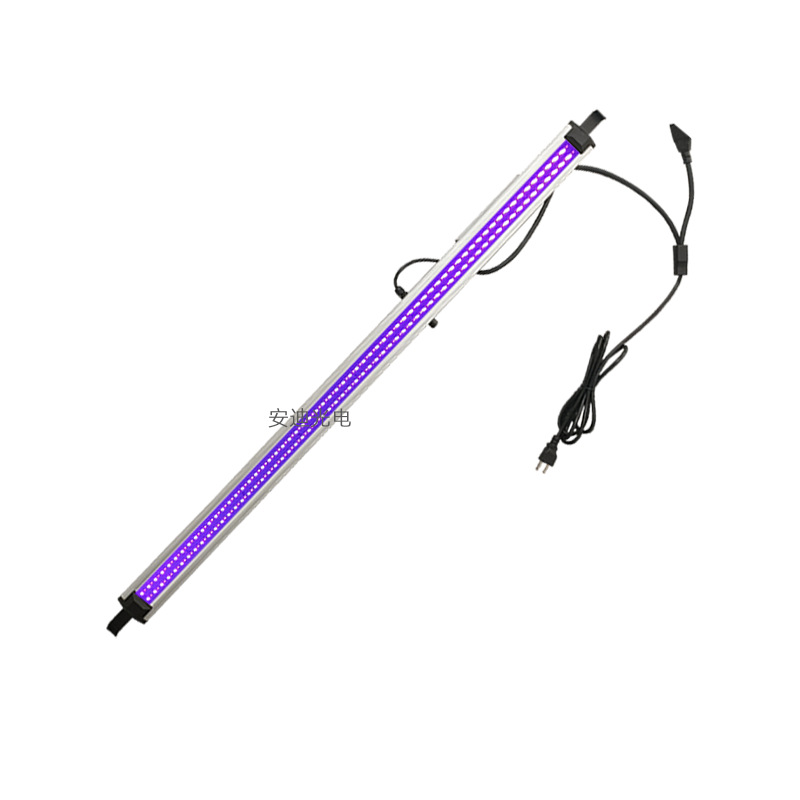
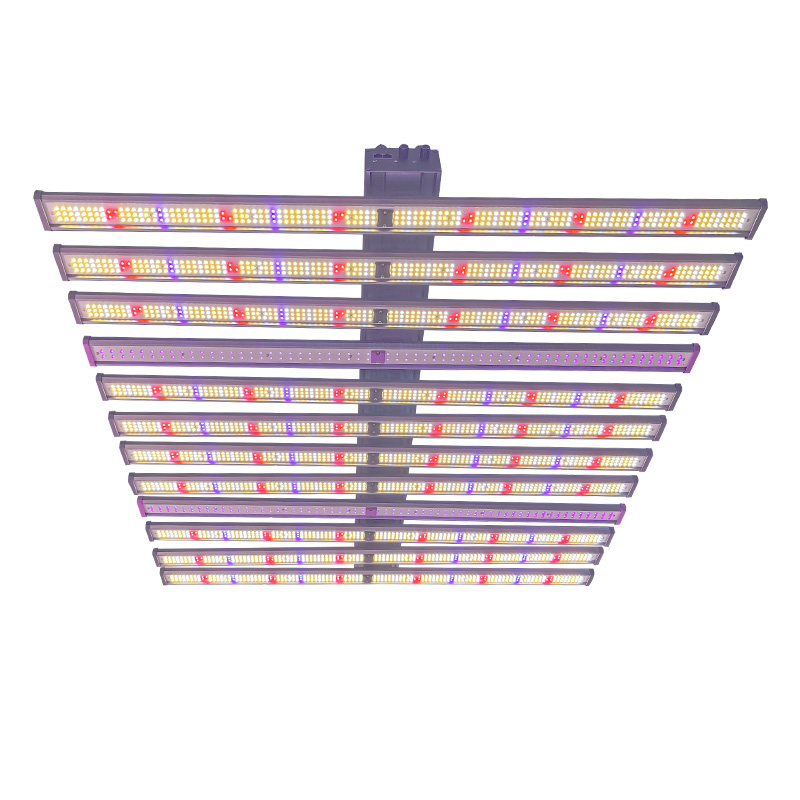
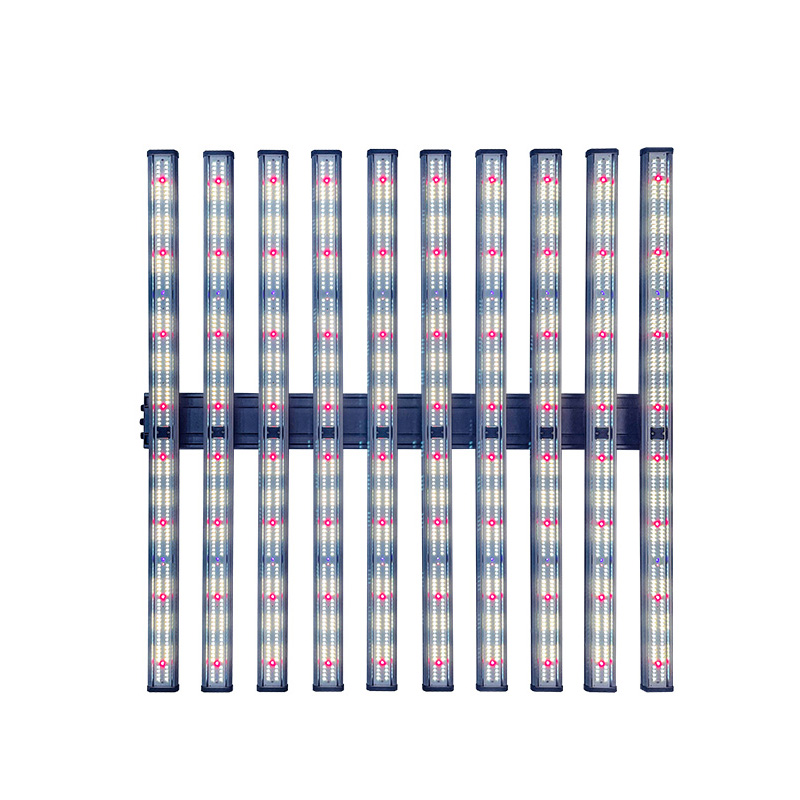
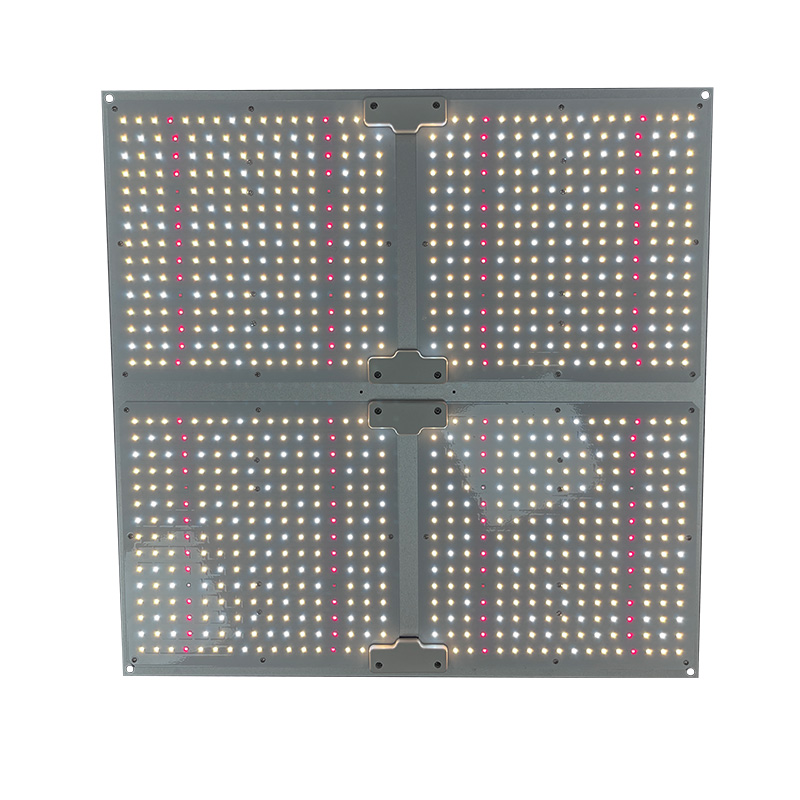
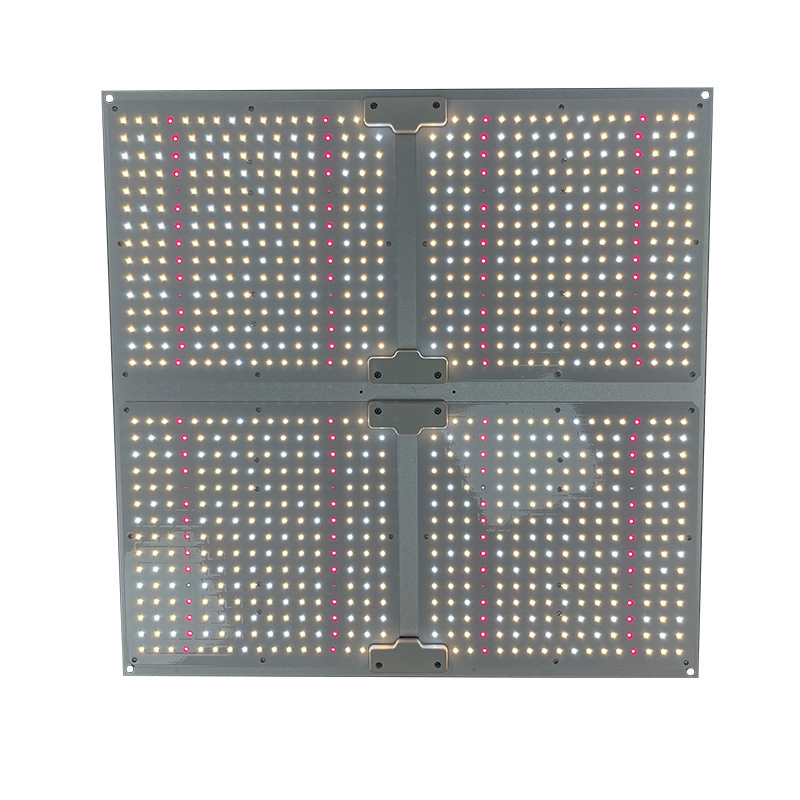
Test smooth dimming, recovery after power loss, and room-level schedules. Precise schedule control can lengthen or limit daily light and manage the photoperiod for vegetative growth or flowering. ANDYLED offers the AD103-1000-D15-110 4×4 grow light with separate white, UV, and IR control. Our guidance begins UV only in the final two to three flowering weeks, limits nighttime exposure to under one hour and total exposure to under two hours, and requires protective equipment. The documented sequence activates the violet channel 10–30 minutes before main lighting and again within 30 minutes after it.
What Durability and Compliance Documents Should Commercial Farms Request?
Verify Safety Certifications for the Destination Market
ANDYLED has focused on LED grow-light research, development, production, and sales for more than a decade. Its company profile records an ISO 9001 quality system and CE, FCC, and RoHS product certifications. Buyers must still request current certificates for the installation jurisdiction and match the model, power range, applicant, and manufacturer to the offered unit.
Check Moisture Protection, Materials, and Passive Heat Dissipation
Grow rooms combine humidity with routine spraying and cleaning. Confirm stated ingress protection, operating humidity, housing material, coating, connectors, and cleaning limits. Inspect how the aluminum structure transfers heat without trapping residue. The rating must match exposure, not appearance.
Review Warranty Coverage, Support Response, and Spare-Part Availability
Read warranty exclusions, claim evidence, labor, freight, repair-versus-replacement terms, and geographic limits. Set acknowledgement and resolution times. Confirm that drivers, dimmers, suspension parts, and connectors will remain available, and identify who supports commissioning when a control or wiring fault affects multiple rooms.
How Can Buyers Compare Cannabis Grow Light Suppliers Before Approving a Farm-Wide Order?
Ask for a Project-Specific Lighting Plan and Comparable Test Conditions
Send every finalist the same drawings, bench layout, target PPFD, mounting height, voltage, and control requirements. Require a fixture schedule, modeled map, electrical summary, and assumptions. Adapt this commercial cannabis lighting selection framework into a common request template so proposals solve the same problem.
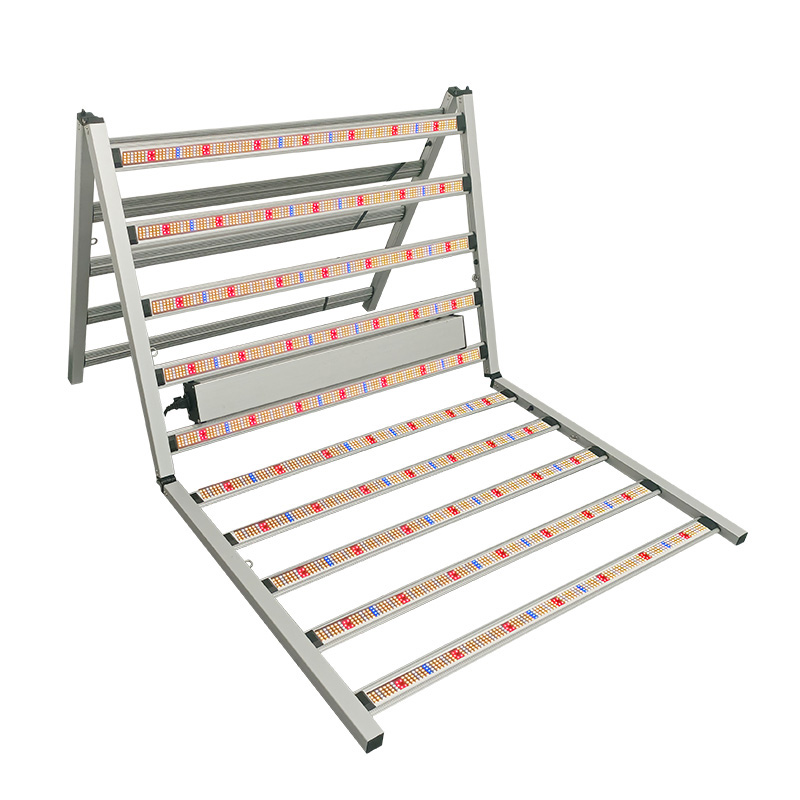
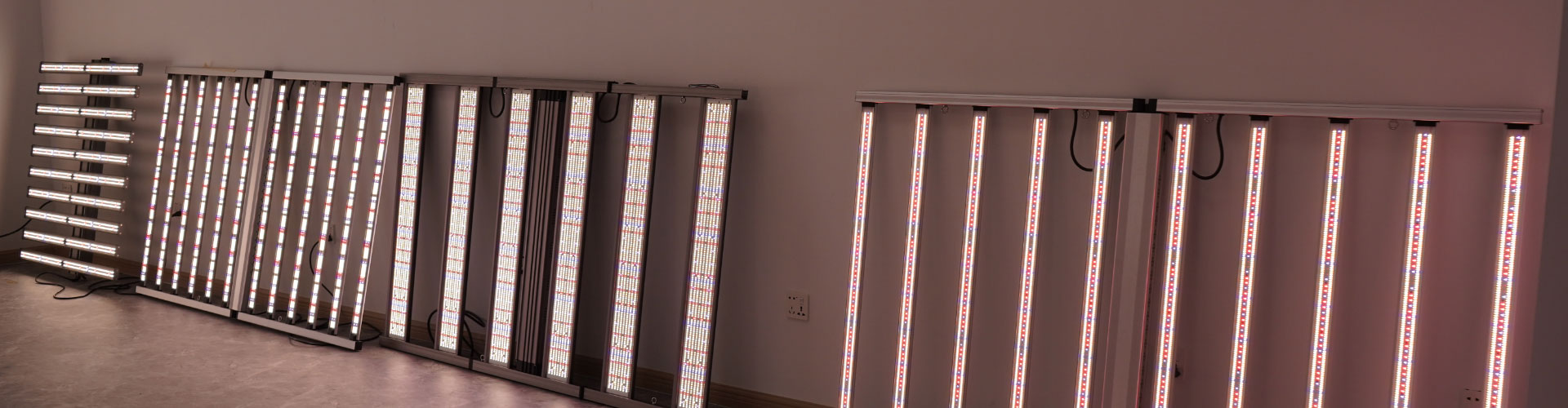
ANDYLED focuses its grow-light offering on farm projects and bar-design fixtures for productive 4×4 and 4×6 layouts. Supporting information describes integrated production from surface-mount processing through assembly, stocked materials for responsive customization, and capacity planning for larger orders. The portfolio emphasizes an 800W single-channel dimming category for 4×4 ft areas and a 1000W adjustable-brightness category for 4×6 ft areas.
Run a Sample-Zone Trial and Record Canopy Measurements
Install a representative group, not one isolated fixture. Record grid PPFD, canopy and air temperatures, dimming, energy use, plant response, installation time, controller behavior, and maintenance access. A list of common grow-light purchasing mistakes can help define failure conditions before testing.
Use a Final Purchase Checklist Before Signing the Order
Verify the Technical Evidence Pack
Approve the final specification, PPFD maps, test conditions, electrical data, controller protocol, certificates, materials, and warranty. Freeze model numbers and revisions. Any component substitution requires technical review before production.
Confirm Installation and Commissioning Deliverables
List suspension parts, cables, connectors, adapters, control gateways, manuals, and spares. Define who installs, configures groups, tests dimming, and records the acceptance grid. Commission at the planned hanging height. Handover settings, as-built zones, baseline readings, and a correction process.

Confirm Production Schedule and After-Sales Support
Tie the order to an approved sample, bill of materials, packaging, customization record, production milestones, inspection, and shipping plan. Identify one after-sales contact and escalation route. Confirm response targets and replacement-part logistics. Proceed only when technical evidence, commissioning scope, delivery, and support ownership agree.
FAQ
Q: What should I look for when buying a Cannabis Grow Light for a commercial farm?
A: Start with canopy area, stage-specific PPFD and DLI, mounting height, electrical and climate capacity, controls, certifications, and warranty. Compare maps under common conditions, then test the preferred system in a representative zone.
Q: How many Cannabis Grow Light fixtures does a commercial grow room need?
A: Divide the productive canopy into validated coverage zones, not total room area. Count depends on target PPFD, hanging height, usable map, fixture overlap, bench geometry, and dimming. Check the supplier’s layout with on-canopy measurements.
Q: What PPFD should a Cannabis Grow Light deliver during flowering?
A: There is no universal flowering value for every cultivar and facility. Set a target with the cultivation team around crop response, photoperiod, carbon dioxide, nutrients, and climate capacity. Verify the average and low points across the entire canopy instead of specifying only a peak reading.
Q: How can I compare Cannabis Grow Light PPFD maps from different suppliers?
A: Require the same mapped footprint, hanging height, measurement-grid spacing, fixture orientation, dimming setting, and room assumptions. Compare average, minimum, maximum, edges, corners, and uniformity. If testing conditions differ, ask suppliers to rerun or remodel the maps before ranking the fixtures.
Q: Does a commercial Cannabis Grow Light need dimming and group control?
A: Usually, yes. Dimming lets farms match intensity to growth stage and environmental capacity, while group control keeps room or zone settings consistent. Buyers should test scheduling, recovery after power interruption, controller compatibility, zoning limits, and manual override behavior during the sample trial.


