
LED Grow Lights: How Many Watts Do Your Plants Really Need
LED Grow Lights should be chosen according to usable light at the crop canopy. They should not be picked by the highest watt number on a listing. Watts show power draw. Plants respond to photon output. They also respond to canopy PPFD, daily light integral, uniformity, and room capacity.
Why Wattage Alone Cannot Tell You How Powerful LED Grow Lights Are
Actual Wattage vs “Equivalent Wattage”: What Does the Number Really Mean?
Watts show electrical consumption. For grow light power consumption, the useful number is actual wall draw. This tells how much power the fixture uses at a given output. LED grow lights’ actual wattage is very different from older equivalent wattage language.

“1000W equivalent” may compare an LED to an older HID class. It may also support a marketing brightness claim. It does not prove the fixture pulls 1000W. It does not prove the fixture covers a 4×4 or 4×6 canopy. It also does not prove the fixture delivers enough PPFD. Actual watts versus equivalent watts matters. Planning starts with real input, photon output, and layout.
Watts vs PPF, PPFD, PPE, and DLI: Which Metrics Matter to Plants?
Two LED Grow Lights with the same wattage can perform differently. Watts are only the input. The practical chain is watts to PPE to PPF to canopy PPFD to DLI.
PPE shows how efficiently a fixture turns electricity into plant-usable photons. PPF is total photon output. PPFD is photon density at the canopy. DLI is the daily total after photoperiod. This LED grow light efficiency guide is useful when comparing wattage with photon output.
How Many Watts of LED Grow Lights Do You Need per Square Foot?
Calculate the Active Canopy Area Before Calculating Wattage
Start with planted canopy. Do not start with the full grow room floor. A 4×6 room may include aisles. It may also include wall clearance or working space that does not need full production PPFD. LED grow light coverage should be calculated from the leaf area you want to illuminate.
This is why a grow light coverage calculator is only useful when canopy dimensions are honest. Four trained plants or sixteen smaller plants can both fill a 4×4 canopy. The target is still 16 sq ft.
Use Watts per Square Foot as a Starting Point, Not a Final Target
Watts per square foot can be a planning range. It is not the final answer. A simple estimate is lower for seedlings. It is moderate for vegetative growth. It is higher for flowering or fruiting crops that can use stronger PPFD.
|
Planning use |
Typical decision |
|
Seedlings and propagation |
Choose gentle output and dimming range before maximum watts |
|
Vegetative canopy |
Increase output as leaf area expands |
|
Flowering or fruiting canopy |
Size for target PPFD, DLI, uniformity, and environment |
“How much grow light do I need?” depends on fixture efficacy, crop, stage, hanging height, target PPFD, and room control.
Why Larger Canopies Need More Than Simply “More Watts”
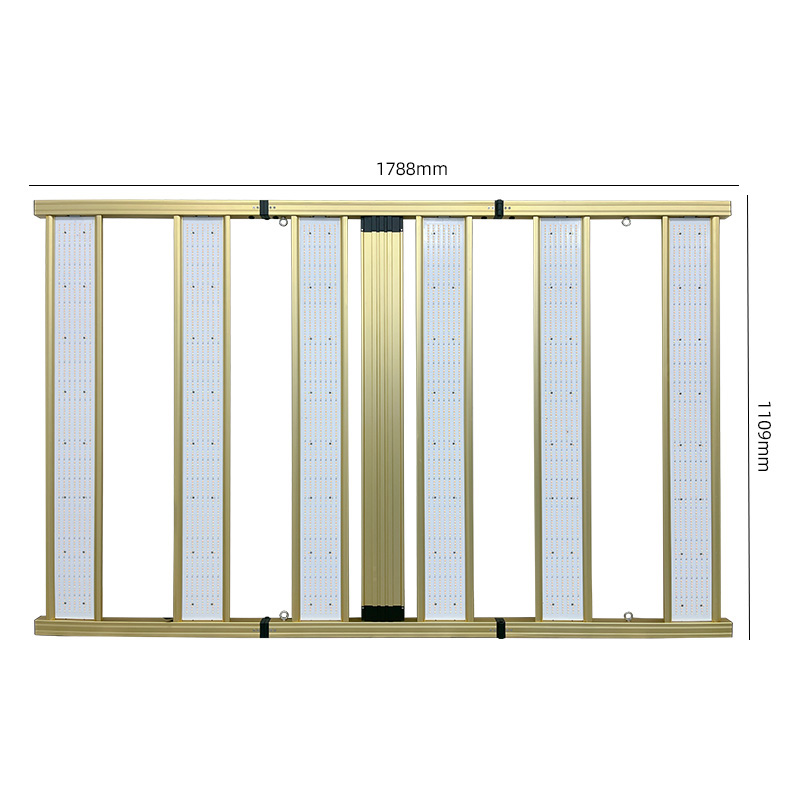
Larger canopies need a layout. They need more than a bigger number. Fixture footprint, bar spacing, overlap, edge coverage, and hanging height all change the result. A 4×6 bay needs uniform corners and edges. It does not need only a high center reading.
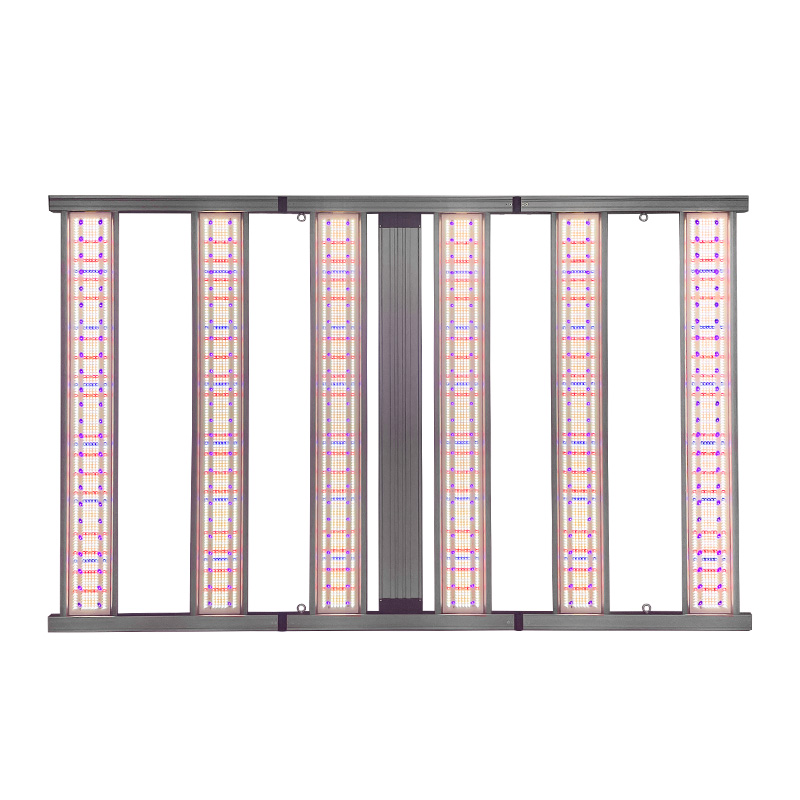
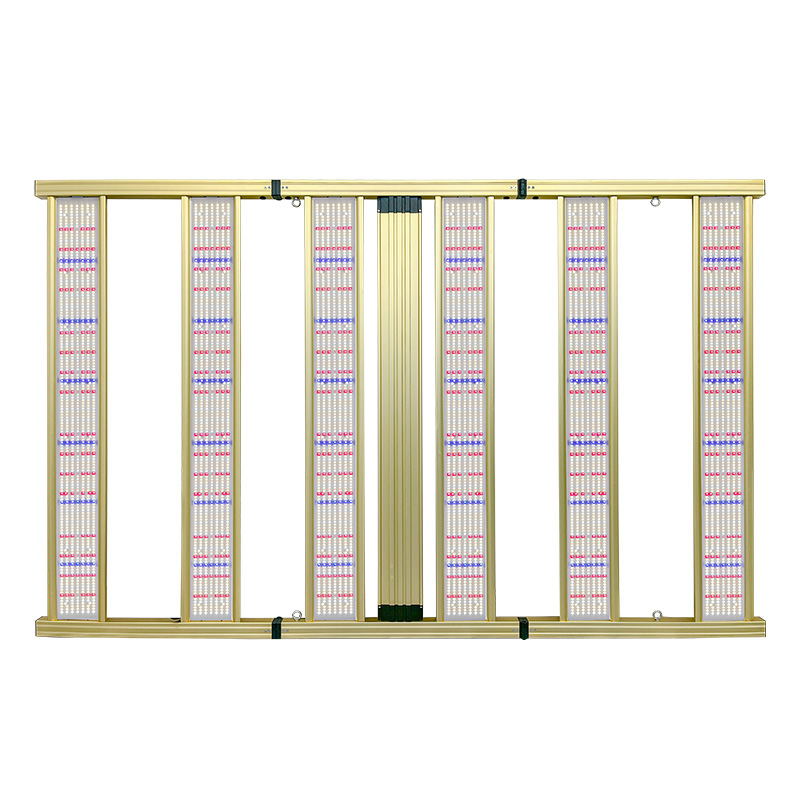
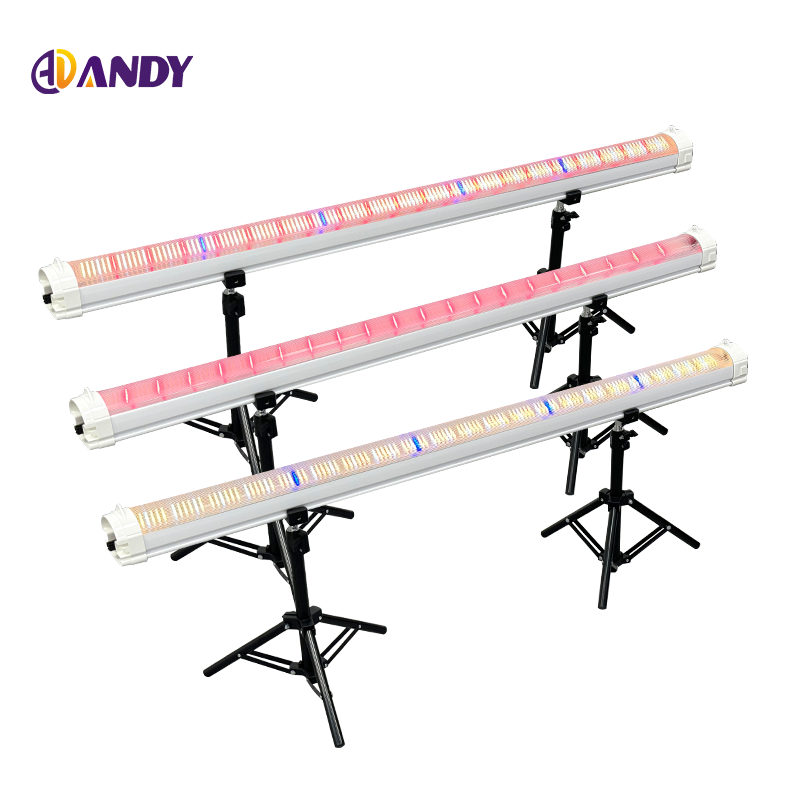
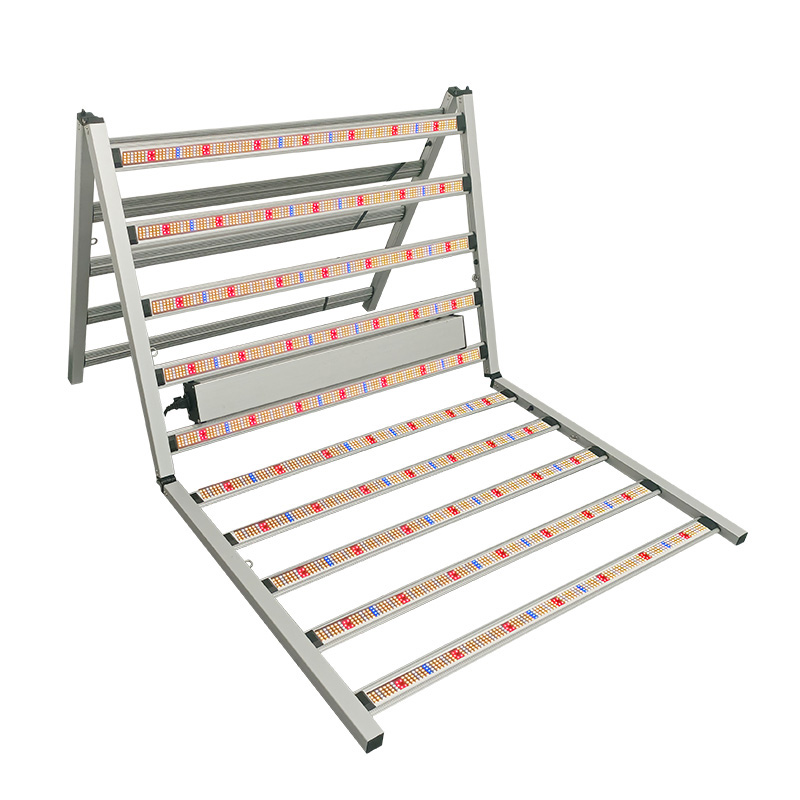
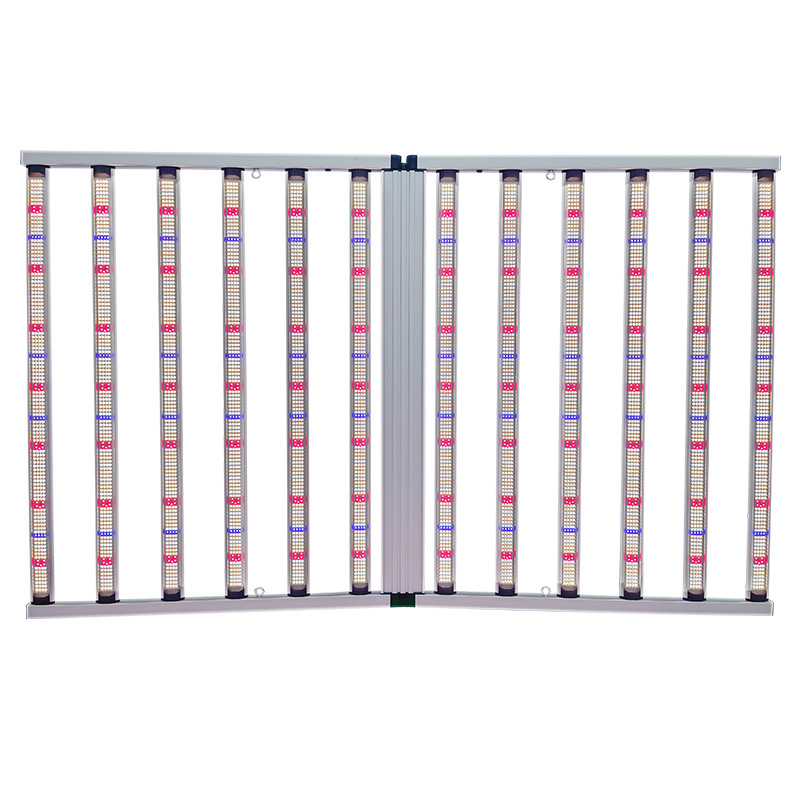
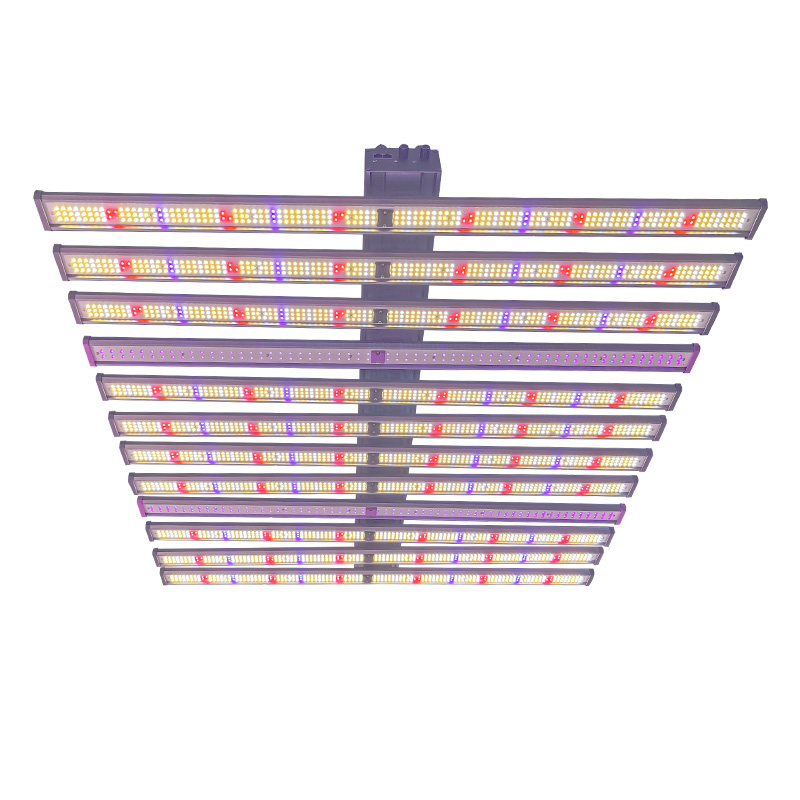
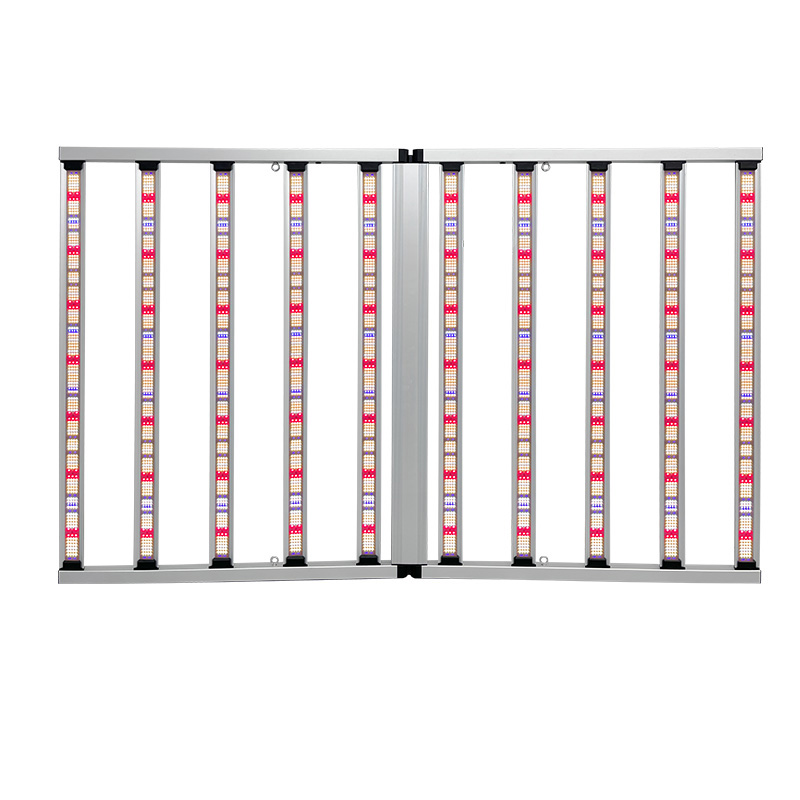
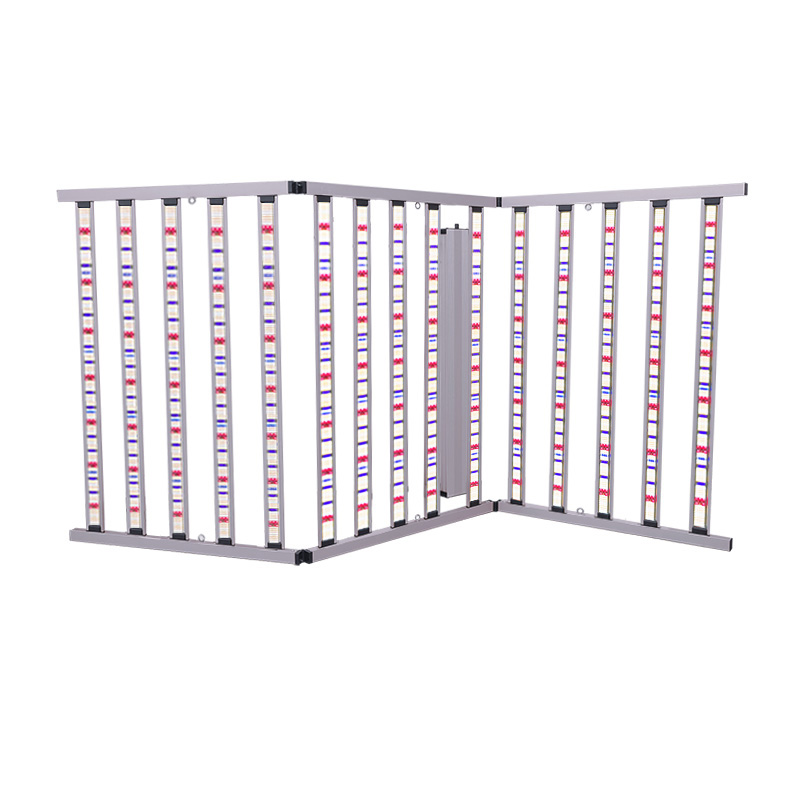
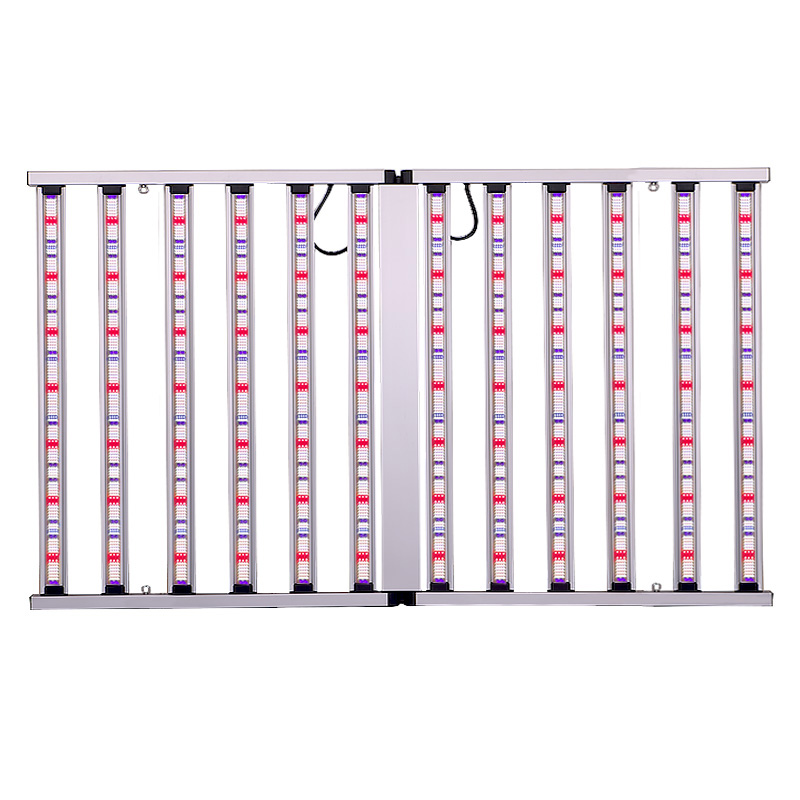
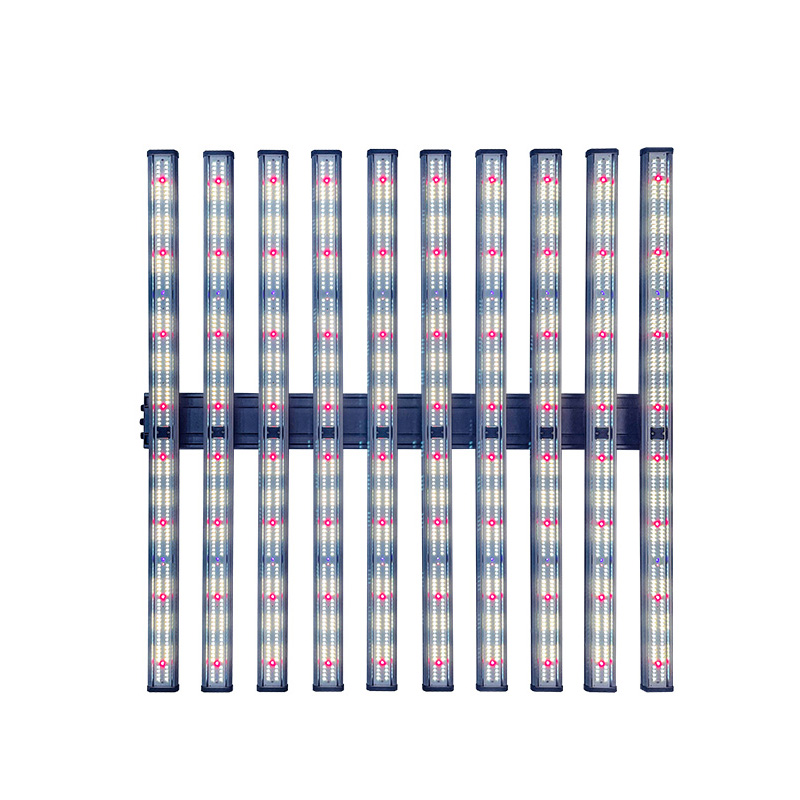
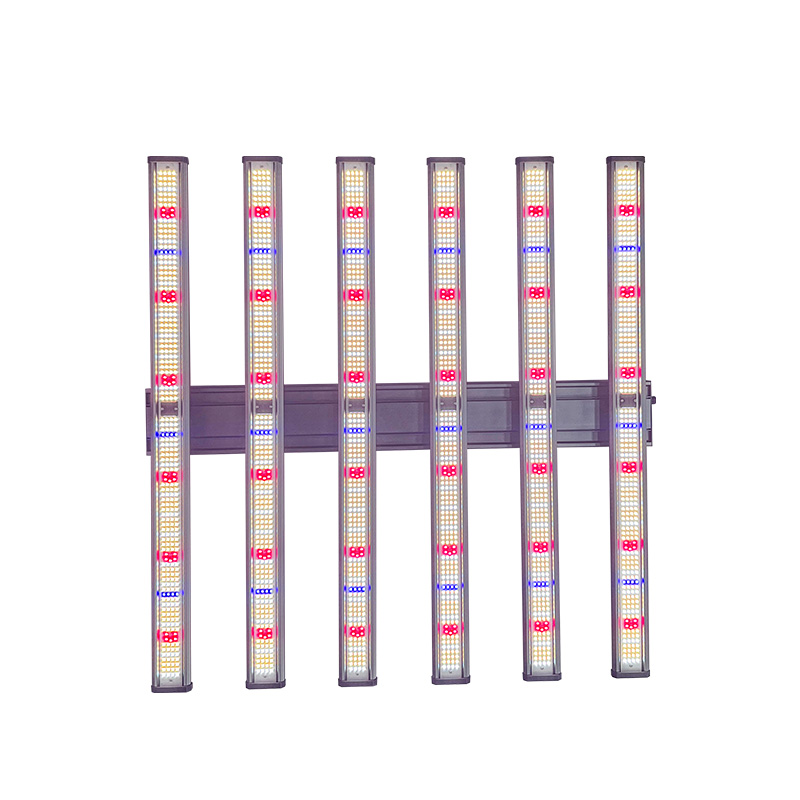
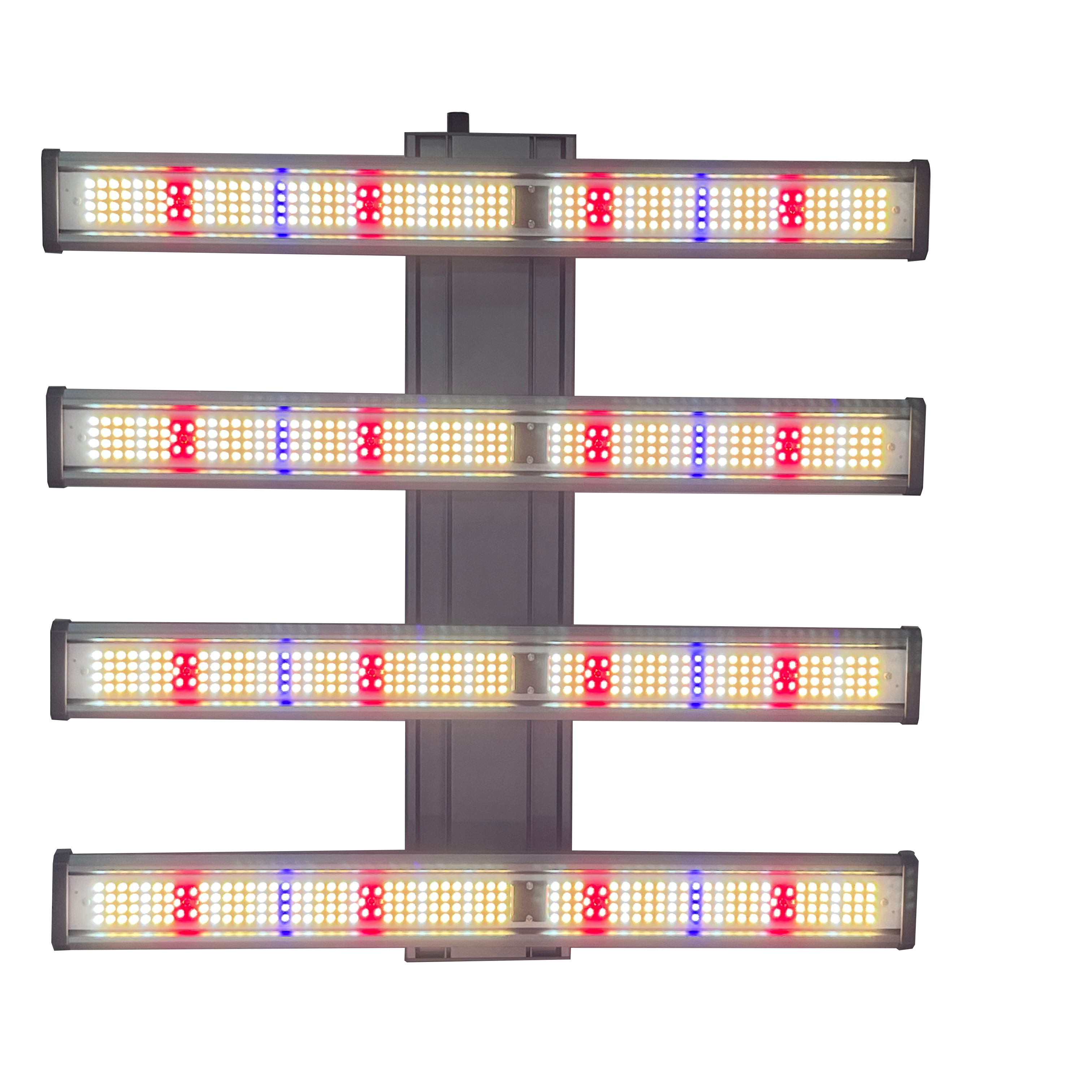
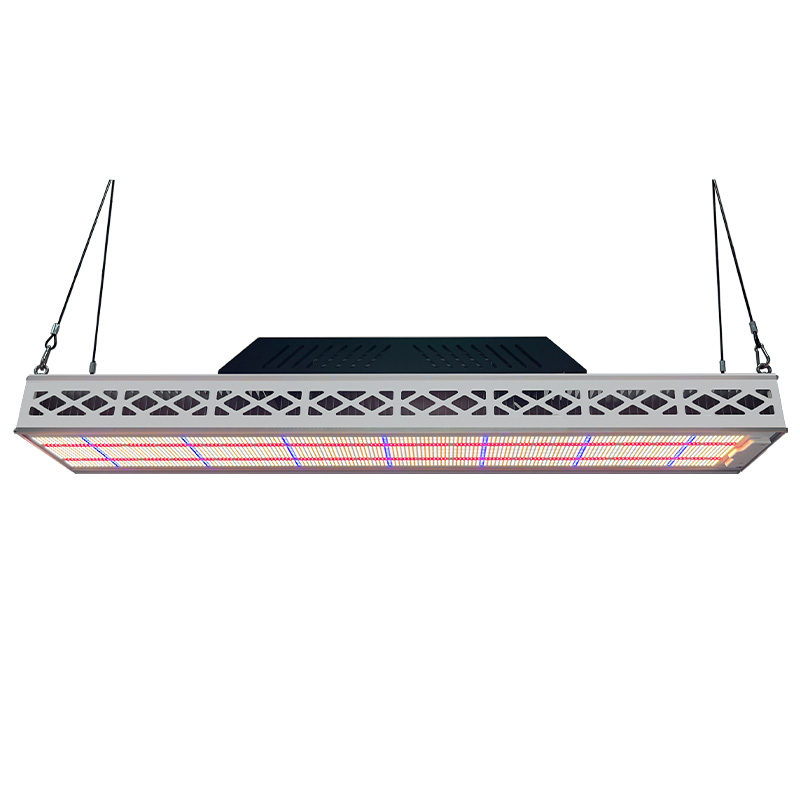
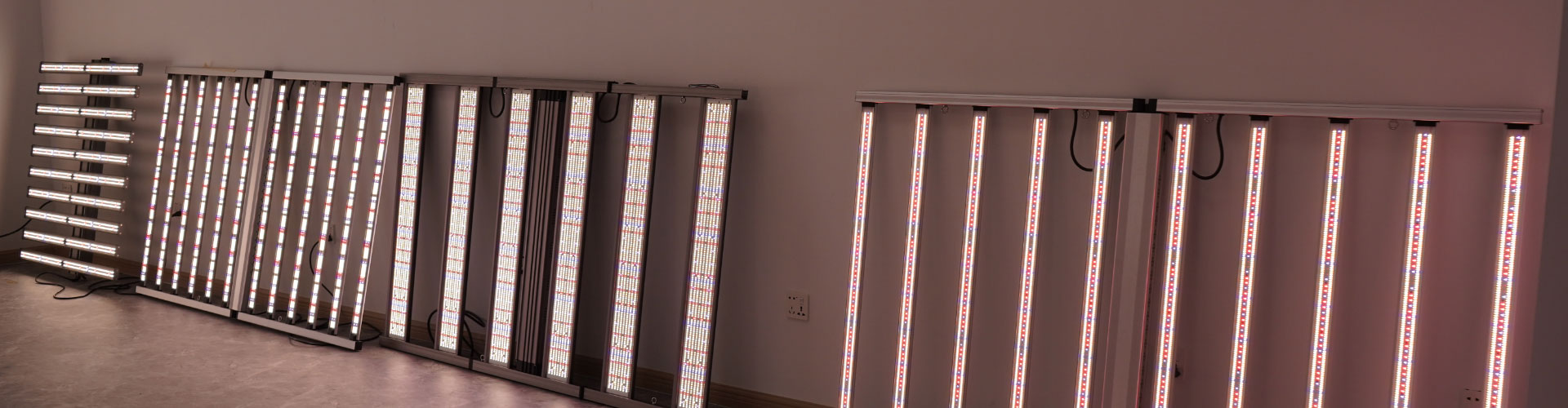
ANDYLED focuses on bar-style LED Grow Lights for commercial canopy planning. In these cases, distribution and fixture geometry matter as much as rated power.
How Should LED Grow Light Wattage Change by Plant Type and Growth Stage?
Seedlings and Young Plants: Why Maximum Wattage Is Usually Unnecessary
LED Grow Lights for seedlings rarely need full fixture capacity. Young plants have small canopies. They also have lower PPFD demand. Grow light wattage for seedlings should mean operating output. It should not mean printed maximum power.
ANDYLED reference settings for a 1000W 4x6ft fixture use 20%-40% dimming. They use about 200-400W during seedling or germination. PPFD stays around 400-500 umol/m2/s. These are starting references. Large dimmable fixtures can start low. They do not need to be replaced at every stage.
Vegetative Growth: Increase Light as the Canopy Expands
Vegetative plants build the leaf area. This area will later support flowering or fruiting. As the canopy expands, photosynthetic demand rises. Operating output can rise with it.
In the ANDYLED stage references vegetative growth uses 50%-70% dimming. It uses about 500-700W on the same 1000W 4x6ft setup. Operators should watch leaf posture. They should check color, canopy temperature, root recovery, and irrigation response before increasing output.
Flowering and Fruiting Plants: When Higher Output Becomes Useful
Flowering cannabis, tomatoes, peppers, and similar high-light crops often need higher PPFD than seedlings. Upper fixture capacity becomes useful at that point.
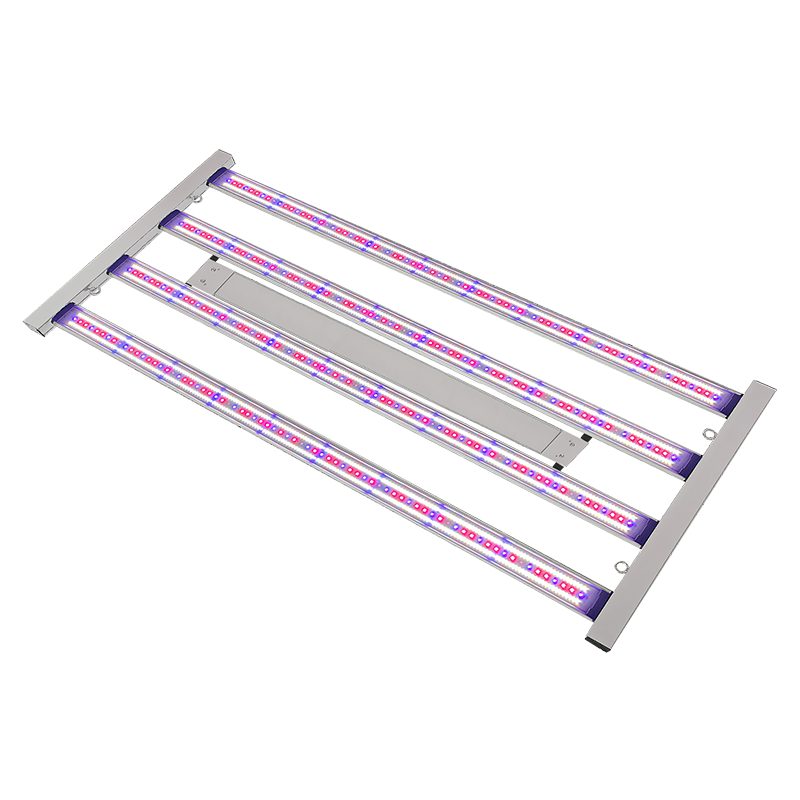
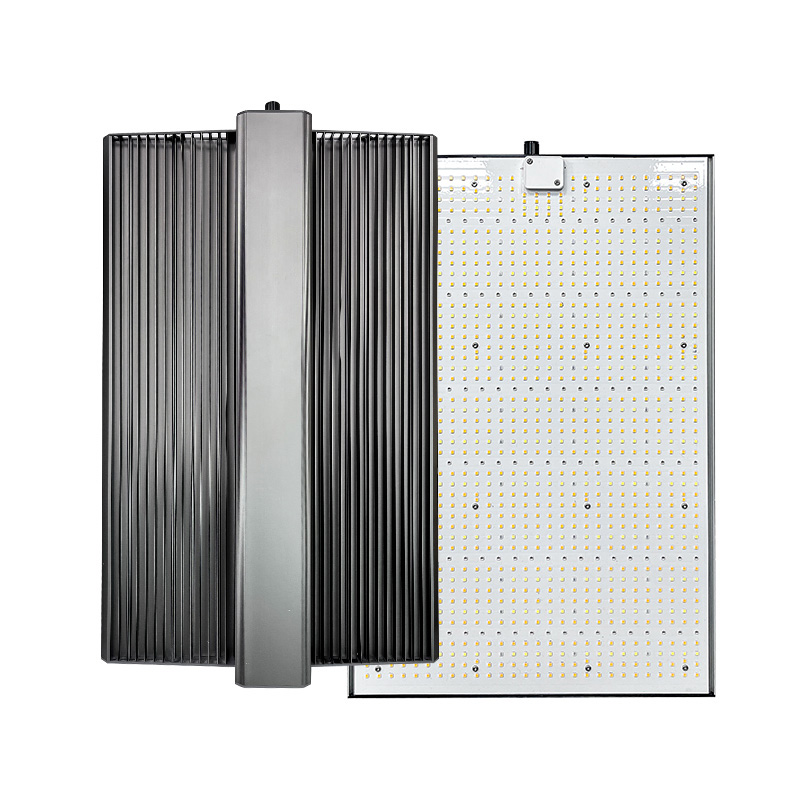
For the same 1000W 4x6ft reference, bloom uses 80%-100% dimming. It uses about 800-1000W. Harvest runs at 100%. A product such as the 1000W 4x6ft LED Grow Light-AD10-1000-2C2-180 is best judged by final canopy coverage. It should not be judged by assuming every stage needs full power.
Why Can Two LED Grow Lights With the Same Wattage Perform Differently?
Higher PPE Means More Plant-Usable Light From Each Watt
If two fixtures both draw 800W, they may not produce the same plant-usable light. A practical estimate is PPF equals wattage times PPE. Higher PPE means more photons from each watt.
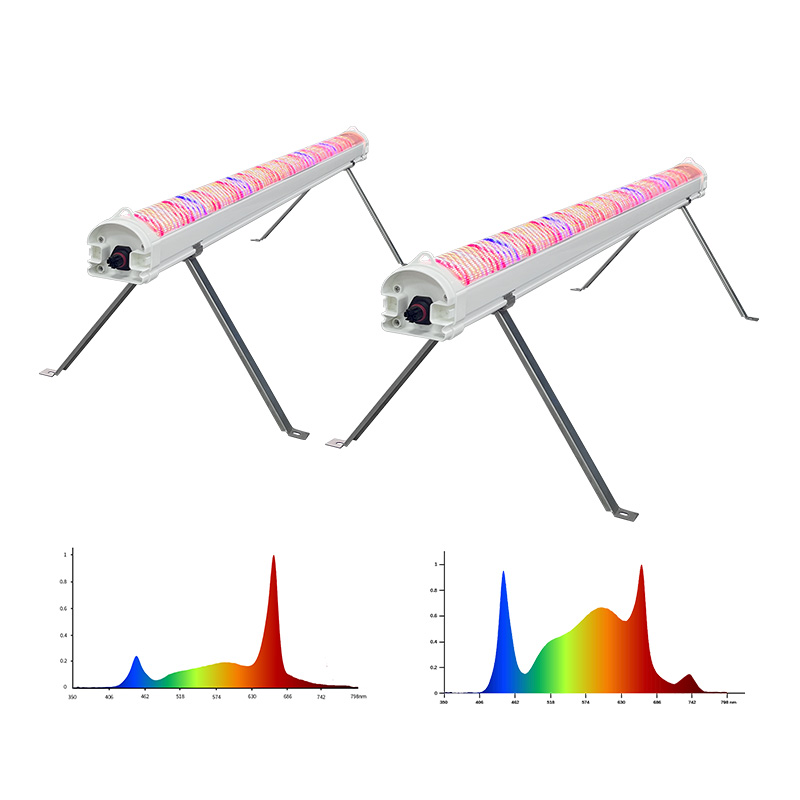
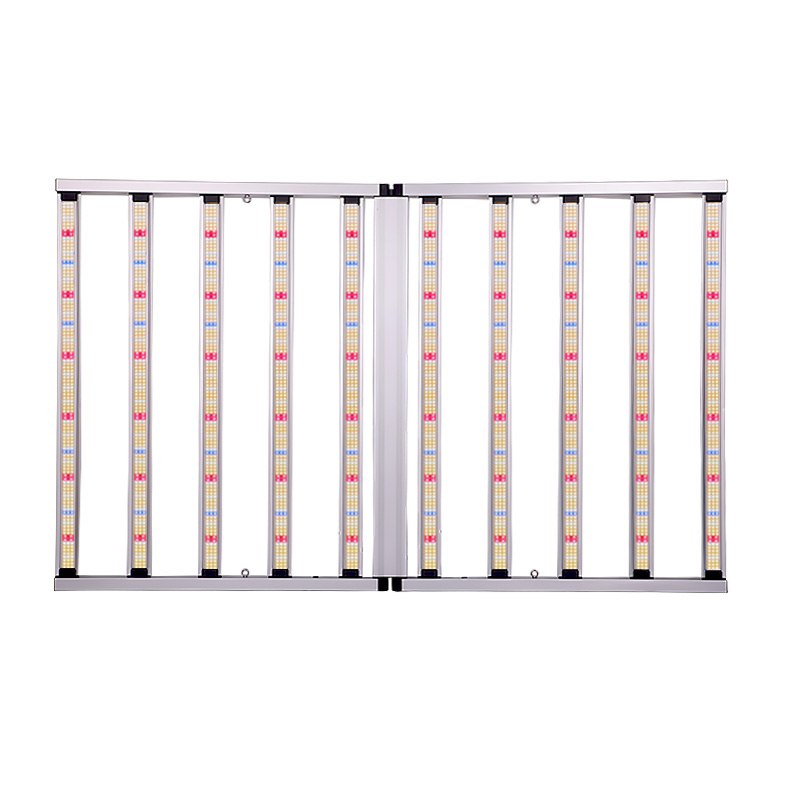
ANDYLED public wording uses 3.0 umol/J as a commercial bar-style LED example. It uses Samsung as the LED brand rather than a specific diode model. For a 4×4 bay, the 800W 4x4ft LED Grow Lights-AD8-800W-2C2-110 shows why buyers should compare efficacy, PPF, fixture shape, and PPFD maps.
PPFD Maps Reveal What Wattage Cannot Show
LED grow light PPFD maps show the canopy results. These include center PPFD, edge PPFD, corners, average PPFD, and uniformity. A high center reading can hide weak edges or hotspots.
PPFD versus watts is plant exposure versus electrical input. Before scaling a room, measure canopy PPFD at common dimming settings. Do not measure only at 100% output.

Fixture Shape and Hanging Height Change Canopy Coverage
The same wattage behaves differently in a compact fixture. It also behaves differently in a wide bar fixture or multiple overlapping fixtures. Hanging height changes intensity and uniformity. Lower mounting can raise center intensity. It can weaken edge balance. Higher mounting may improve spread. It can reduce PPFD.
How to Choose LED Grow Lights Without Wasting Power or Sacrificing Coverage
Size LED Grow Lights for the Canopy, Not the Number of Plants
“Watts per plant” is usually weak. Plant count changes with training style, cultivar, pot size, and crop cycle. The mature canopy footprint must receive light. Size for the filled canopy. Then confirm with a PPFD map.
This matters in commercial rooms. One poor edge row can reduce batch consistency. Our farm-focused approach treats watts, bar layout, dimming, and measurement as one system.
Choose Enough Maximum Wattage, Then Use Dimming by Growth Stage
A practical buying strategy is to choose enough maximum wattage. It should also provide coverage for the mature canopy. Then use dimming through earlier stages.
Selected ANDYLED configurations may support two-channel dimming. They may support 0-10V output adjustment, AC parallel connection, and controller scheduling. Exact architecture, group size, timing behavior, interruption handling, and restart state should be verified before purchase.
Check Heat, Electricity, and Environmental Capacity Before Increasing Wattage
Higher output is also an infrastructure decision. More wattage affects electrical load. It affects HVAC, airflow, humidity, irrigation response, canopy temperature, and operating cost. Aluminum and fanless construction help heat dissipation. They do not keep fixtures at a constant temperature.
Before adding fixtures or raising dimming setpoints, review commercial grow room electrical planning with the final lighting layout, HVAC capacity, dehumidification, and circuit limits.
FAQ
Q: How Many Watts Should LED Grow Lights Use per Square Foot?
A: Use watts per square foot only as a planning estimate. Final sizing should come from active canopy area, fixture PPE, target PPFD, photoperiod, DLI, hanging height, and crop stage.
Q: Are Higher-Watt LED Grow Lights Better for Plants?
A: Not automatically. Higher watts can help when the canopy needs more PPFD. This only works if the fixture is efficient, uniform, properly hung, and supported by the room environment.
Q: How Do I Choose LED Grow Lights for a 4×4 Grow Space?
A: Size the mature 4×4 canopy. Compare actual wattage rather than equivalent wattage. Check PPF and PPFD maps. Choose dimming capacity so seedlings, veg, and flowering can run at different outputs.
Q: Do LED Grow Lights Need Full Power During the Seedling Stage?
A: Usually no. Seedlings need lower PPFD and smaller coverage. A dimmable fixture can run at reduced output during early growth. It can increase as the canopy and roots develop.
Q: What Matters More for LED Grow Lights: Wattage or PPFD?
A: PPFD matters more to the plant. It measures light arriving at the canopy. Wattage still matters for power planning, heat load, fixture capacity, and operating cost.


